Yacht running costs: what owners actually spend per year
The purchase price gets all the attention. It is the number on the listing, the number you negotiate. But once the deal closes, a second set of numbers takes over, and those numbers determine whether yacht ownership stays enjoyable or becomes a source of stress. Yacht running costs are predictable if you plan for them. Most buyers do not, at least not in enough detail.
This article breaks running costs down by category and by yacht size, using realistic 2026 figures. If you want the full picture including purchase prices, depreciation, and total cost of ownership, see our Yacht Prices & Ownership Costs Guide.
Contents
- The complete breakdown by size
- Crew costs
- Fuel
- Marina and berthing fees
- Maintenance
- Insurance
- Management fees
- Motor yacht vs sailing yacht: how costs differ
- Where the season changes the bill
- Costs people forget about
- Ten ways to reduce your running costs
- FAQ
The complete breakdown by size
Start with the overview. The table below shows what yacht owners typically spend per year, broken down by size.
| Expense | 30 ft sailing yacht | 50 ft motor yacht | 80 ft superyacht | 100 ft+ superyacht |
|---|---|---|---|---|
| Crew | €0 | €40,000–€120,000 | €250,000–€500,000 | €600,000–€1,200,000 |
| Fuel | €1,500–€4,000 | €15,000–€45,000 | €60,000–€150,000 | €150,000–€400,000 |
| Marina & berthing | €3,000–€8,000 | €12,000–€40,000 | €60,000–€200,000 | €150,000–€500,000 |
| Maintenance | €3,000–€8,000 | €20,000–€60,000 | €100,000–€300,000 | €250,000–€700,000 |
| Insurance | €1,000–€3,000 | €8,000–€25,000 | €50,000–€120,000 | €120,000–€300,000 |
| Management | €0 | €5,000–€20,000 | €50,000–€120,000 | €100,000–€250,000 |
| Miscellaneous | €1,500–€4,000 | €8,000–€20,000 | €30,000–€80,000 | €80,000–€200,000 |
| Total | €10,000–€27,000 | €108,000–€330,000 | €600,000–€1,470,000 | €1,450,000–€3,550,000 |
The ranges are wide because costs depend on where you keep the yacht, how often you use it, crew size, and whether the yacht is in good shape or needs catching up. A 50-foot motor yacht kept in Croatia with no full-time crew is a very different proposition from the same yacht based in Antibes with a live-aboard captain and stewardess.
Crew costs
Crew is the single largest running cost for any yacht over about 60 feet. Below that threshold, many owners manage without full-time crew, or hire a part-time skipper for occasional use.

What crew actually costs when you add everything up:
| Position | Annual salary range | Loaded cost (with benefits) |
|---|---|---|
| Captain (60–80 ft) | €60,000–€96,000 | €75,000–€120,000 |
| Captain (80 ft+) | €84,000–€144,000 | €105,000–€180,000 |
| Chief engineer | €60,000–€96,000 | €75,000–€120,000 |
| Chef | €48,000–€84,000 | €60,000–€105,000 |
| Chief stewardess | €42,000–€66,000 | €52,000–€82,000 |
| Deckhand | €30,000–€48,000 | €37,000–€60,000 |
The “loaded cost” column is the number that actually matters. It includes social charges, health insurance, pension contributions (where applicable), flights to and from the yacht, uniform allowances, training courses, and food while on board. That overhead typically adds 25–35% on top of the base salary.
Crew turnover pushes costs up further. Every time a crew member leaves, you pay recruitment agency fees (usually one month’s salary), fly the replacement in, lose productivity during handover, and spend on new uniforms. Yachts with high turnover can spend 15–25% more on crew than yachts with stable teams.
For a full guide on structuring your crew, see our Yacht Crew Management article.
Fuel
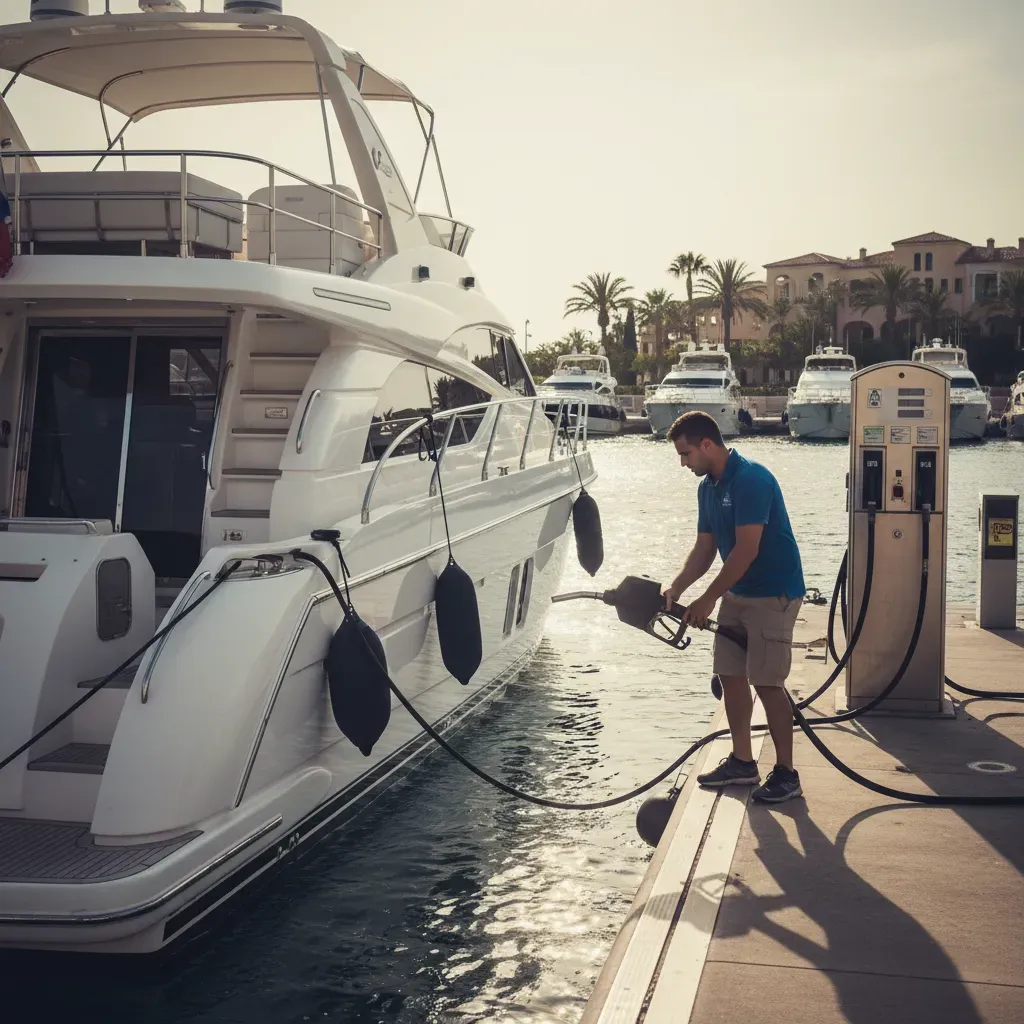
Fuel is the most variable running cost. Two identical yachts with different usage patterns can have fuel bills that differ by a factor of five.
A few reference points for 2026:
- 30 ft sailing yacht: €1,500–€4,000/year. Mostly motoring in and out of harbours, running the engine in calms.
- 50 ft motor yacht, coastal cruising (200–400 hours/year): €15,000–€45,000. At 12–15 knots cruising speed, a typical twin-engine setup burns 60–120 litres per hour.
- 80 ft superyacht (400–600 hours/year): €60,000–€150,000. Larger engines, generators running 24/7 when the crew is on board, plus tender fuel.
- 100 ft+ superyacht: €150,000–€400,000. Twin 2,000+ HP engines burning 200–400 litres per hour at cruising speed, plus generator fuel for hotel loads.
Diesel prices in the Mediterranean sit around €1.20–€1.80 per litre depending on country and port. Turkey and Greece tend to be cheaper than France and Italy. The Caribbean is often cheaper still, though prices fluctuate more.
Speed makes the biggest difference. Running at 75% throttle instead of 90% can cut fuel consumption by 30–40% on most displacement and semi-displacement hulls. Owners who track engine hours and fuel consumption per trip spot this quickly.
Marina and berthing fees
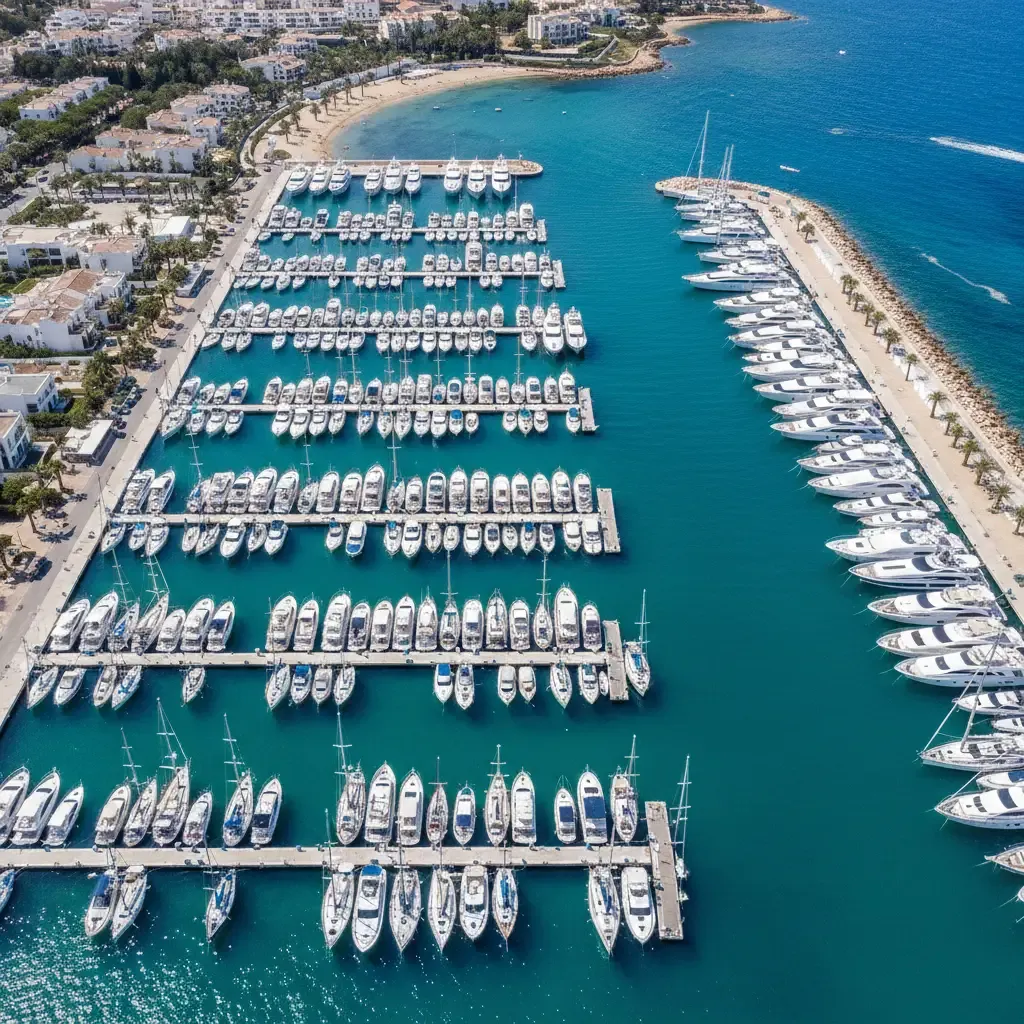
Berthing is one of those costs that varies more by postcode than by yacht size. An annual berth for a 50-foot yacht in Palma de Mallorca might cost €25,000. The same berth in Porto Cervo could be €45,000. In Göcek, Turkey, you might pay €10,000.
Rough annual ranges by region for a 50-foot motor yacht:
| Region | Annual berth cost |
|---|---|
| French Riviera | €25,000–€45,000 |
| Italy (Sardinia, Amalfi) | €20,000–€40,000 |
| Spain (Balearics, Costa del Sol) | €15,000–€30,000 |
| Croatia | €8,000–€18,000 |
| Turkey | €6,000–€15,000 |
| Greece | €8,000–€18,000 |
| Caribbean (annual) | €10,000–€25,000 |
| UK (south coast) | €8,000–€20,000 |
Most marinas offer discounts for annual contracts over monthly or seasonal bookings, typically 10–20% off the headline rate. Some eastern Mediterranean marinas give further discounts for multi-year commitments.
Keep in mind that marina fees do not always include electricity, water, Wi-Fi, or waste disposal. In high-end marinas, these extras can add €200–€500 per month on top.
Maintenance

Maintenance splits into two categories: routine and major. Routine maintenance is the predictable work that happens every year. Major maintenance (refits, engine overhauls, system replacements) happens on a longer cycle and hits harder when it comes.
Routine annual maintenance typically includes:
- Two haul-outs per year (antifouling, hull inspection, running gear check): €5,000–€25,000 depending on size
- Engine servicing (oil, filters, impellers, belts): €2,000–€15,000
- Generator servicing: €1,000–€5,000
- Electrical and electronics maintenance: €2,000–€10,000
- Deck and teak maintenance: €2,000–€15,000
- Safety equipment inspection and servicing (life rafts, EPIRBs, fire extinguishers): €1,000–€5,000
- General wear items (zincs, seals, pumps, bearings): €2,000–€8,000
Major maintenance on a 5–10 year cycle:
- Full repaint: €100,000–€500,000+ depending on size
- Engine overhaul or replacement: €50,000–€300,000
- Teak deck replacement: €80,000–€250,000
- Electronics suite upgrade: €30,000–€100,000
- Interior refit: €50,000–€500,000+
The gap between reactive and preventive maintenance is large. Fixing a pump after it fails costs 2–3x more than replacing it on schedule. An engine overhaul done on time might cost €80,000. The same engine seized because an oil change was skipped could need full replacement at €250,000.
For more on building a maintenance budget, see our Yacht Maintenance Budget guide. For scheduling specifics, our Yacht Maintenance & Safety Guide covers that in detail.
Insurance
Yacht insurance typically costs 1–2% of the insured value per year. A €2 million yacht insures for roughly €20,000–€40,000 annually. But several factors push premiums up:
- Navigation area. Caribbean year-round (hurricane exposure) adds 10–20% over a Mediterranean-only policy.
- Charter use. Commercially coded yachts pay higher premiums than private-use only.
- Claims history. One major claim can increase premiums by 25–50% at renewal.
- Crew qualifications. Having appropriately certificated crew (RYA Yachtmaster, MCA-approved) can reduce premiums.
- Age of yacht. Older yachts, particularly those over 20 years, face higher premiums or coverage exclusions.
Hull and machinery cover is the main policy, but you also need third-party liability (P&I), and if you carry crew, employers’ liability. Some owners add loss of charter income cover if the yacht is commercially operated.
For a detailed breakdown of policy types and how to reduce premiums, see our Yacht Insurance Guide.
Management fees
If you use a yacht management company, expect to pay 3–8% of the yacht’s annual operating budget, or a fixed monthly fee. For a yacht with €500,000 in annual running costs, that means €15,000–€40,000 per year for management.
What you get for that fee varies. At the lower end, it covers basic financial administration and bill payment. At the higher end, it includes full technical management, crew recruitment, compliance, and operational oversight.
Some owners self-manage smaller yachts to save money. That works if you have the time and know what you are doing. Once a yacht needs full-time crew, class surveys, and flag state compliance, professional management tends to pay for itself. Good managers catch problems early and negotiate better rates with suppliers than most owners can get on their own.
Our Yacht Management: Complete Guide covers how to decide between self-management and hiring a company, including what to look for and what to avoid.
Motor yacht vs sailing yacht: how costs differ
The gap is real. A 50-foot motor yacht costs roughly 40–60% more to run per year than a 50-foot sailing yacht of similar quality. The table shows where the differences sit:
| Cost category | 50 ft sailing yacht | 50 ft motor yacht | Difference |
|---|---|---|---|
| Fuel | €2,000–€6,000 | €15,000–€45,000 | 5–8x higher |
| Maintenance (engines/rig) | €8,000–€20,000 | €15,000–€35,000 | 1.5–2x higher |
| Insurance | €5,000–€15,000 | €8,000–€25,000 | 1.5x higher |
| Marina fees | €8,000–€20,000 | €12,000–€30,000 | 1.3x higher (wider beam) |
| Crew | Usually none | €0–€80,000 | Motor yachts more likely to need crew |
Sailing yachts save on fuel (wind is free) and tend to have lower insurance premiums because they travel at slower speeds with lower collision risk. Motor yachts cost more on fuel, have more complex mechanical systems, and are wider, which means higher berthing fees per metre.
The exception is large sailing yachts over 80 feet. Their rigging maintenance (standing rigging replacement every 8–12 years, running rigging every 3–5 years) is expensive, and they need specialist crews for sail handling. At that size, the cost gap between sail and power narrows.
Where the season changes the bill
Yacht running costs are not spread evenly across the year. There is a clear seasonal pattern, and understanding it helps with cash flow planning.
Peak season (June–September in the Med): This is when most of the fuel gets burned, provisions get consumed, and wear happens. Crew overtime increases. Marina fees peak. If you charter, this is also when revenue comes in.
Shoulder season (April–May, October–November): Preparation and wind-down. Haul-outs often happen in spring and autumn. This is when you schedule maintenance work, because yards are less booked and rates may be lower than mid-summer.
Off-season (December–March): The yacht is often on a hard stand or in a winter berth. Costs drop to a baseline: crew salaries (if full-time), insurance, marina/storage fees, and any ongoing maintenance. Fuel costs are near zero unless you are transiting to a different region.
Rough seasonal split for a 60-foot motor yacht based in the Mediterranean:
| Period | Percentage of annual costs |
|---|---|
| Peak season (4 months) | 45–50% |
| Shoulder season (4 months) | 25–30% |
| Off-season (4 months) | 20–25% |
Owners who budget monthly often get caught out by the uneven distribution. Setting aside a fixed monthly amount into a dedicated yacht account smooths the cash flow, even when actual expenses spike in summer.
Costs people forget about
Beyond the main categories, a handful of recurring expenses tend to slip through the cracks:
- Satellite communications and connectivity. VSAT or Starlink Maritime costs €1,000–€3,000 per month. Even basic cellular data plans for crew run €200–€500 per month.
- Tender maintenance. The RIB needs servicing, its own insurance, fuel, and eventually replacement. Budget €2,000–€8,000 per year.
- Provisions and consumables. Cleaning supplies, deck products, galley provisions for crew. €5,000–€15,000 per year on an 80-footer.
- Water toys and equipment. Jet skis, paddleboards, dive gear. Insurance, servicing, storage. €3,000–€10,000 per year.
- Flag state fees. Annual registration fees, tonnage taxes, survey fees. €2,000–€15,000 depending on flag and yacht size.
- Classification society. If classed (most yachts over 24 metres), annual survey fees run €5,000–€20,000.
- Laundry. On larger yachts, linen changes and crew uniforms add €3,000–€8,000 per year in laundry service costs.
None of these will break you on their own. Together, they can add €20,000–€60,000 per year on a superyacht. Tracking these line items is how you catch the creep before it gets out of hand.
Ten ways to reduce your running costs
- Base the yacht in the eastern Med. Turkey, Croatia, and Greece offer 30–50% lower marina fees and labour rates than the French Riviera or Sardinia. You can still cruise west in summer.
- Negotiate annual marina contracts. Monthly berthing rates are almost always more expensive. Lock in an annual deal and you save 10–20%.
- Track fuel consumption per trip. Log engine hours and litres per hour. You will quickly see which speeds burn disproportionately more fuel. Slowing down by 2–3 knots can cut fuel bills by a third.
- Invest in preventive maintenance. Replacing wear items on schedule is always cheaper than emergency repairs. Structured maintenance can cut repair costs by 40–50% over a five-year period.
- Retain your crew. Recruitment, training, and handover costs add up. Competitive pay, decent living conditions, and clear expectations reduce turnover.
- Review insurance annually. Get competing quotes. If you have had a claims-free year, use it as leverage. Moving your navigation area to lower-risk zones also helps.
- Bundle services with your management company. Many management companies negotiate volume discounts with yards, suppliers, and insurers. If you pay full retail for everything, you are overpaying.
- Use software to track costs. Marinix OS logs expenses against budget categories in real time, tracks engine hours, and flags when spending is trending above plan. This kind of visibility turns reactive budgeting into proactive cost control.
- Schedule yard work during off-season. Boatyards in peak season charge premium rates and have longer lead times. Winter bookings are cheaper and faster.
- Right-size your crew. A yacht with more crew than it needs is wasting money on salaries, provisions, and flights. Match crew numbers to actual usage, not peak-season maximums.
FAQ
How much does it cost to run a yacht per year?
A 30-foot sailing yacht costs €10,000–€27,000 per year. A 50-foot motor yacht runs €108,000–€330,000. An 80-foot superyacht typically costs €600,000–€1,470,000. These figures include crew, fuel, marina, maintenance, insurance, and management but not major refits.
What is the biggest running cost on a yacht?
For yachts under 50 feet, maintenance and marina fees tend to be the largest items. Above 60 feet, crew costs take over and typically account for 35–45% of total running costs. On a 100-foot superyacht, crew salaries and associated costs can exceed €1 million per year.
Are sailing yachts cheaper to run than motor yachts?
Yes, typically 40–60% cheaper for comparable sizes. The main savings come from fuel (wind power versus engines), lower insurance premiums, and simpler mechanical systems. The gap narrows on large sailing yachts where rigging maintenance becomes expensive.
How can I reduce my yacht’s running costs?
Location is the biggest lever: basing in the eastern Mediterranean saves 30–50% on marina and labour. After that, slowing down (cuts fuel by a third), sticking to a maintenance schedule (far cheaper than emergency repairs), and keeping your crew stable (recruitment costs add up fast).
Do yacht running costs include depreciation?
No. The running costs in this article cover operational expenses only. Depreciation is a separate and often larger cost. A new yacht typically loses 15–20% of its value in the first three years. For the full picture including depreciation and total cost of ownership, see our Yacht Prices & Ownership Costs Guide.