Yacht management: the complete guide for owners and operators
You bought a yacht. Now the real work starts. Crew rotations, engine hours, flag state compliance, annual budgets, insurance renewals, class surveys. When all of that lands on your desk in the same week, yacht ownership starts feeling like a second full-time job. This guide covers what yacht management actually involves, whether you own a 12-metre sailing yacht or run a 60-metre motor yacht fleet, and how to figure out what approach fits your situation.
Contents
- What is yacht management?
- The five areas you need to get right
- Self-management vs hiring a company
- What a yacht management company actually does
- Yacht management costs
- ISM Code and flag state requirements
- Seasonal vs year-round management
- How software is changing yacht management
- Picking the right management agreement
- Regional differences
- FAQ
What is yacht management?
Yacht management is everything that keeps a yacht operational, legal, and worth what you paid for it. Technical maintenance. Crew administration. Financial oversight. Compliance paperwork. Day-to-day operations. All of it, running at the same time.
Hiring a captain and hoping they “handle it” is not management. Management means documented processes: hull surveys, engine service intervals, crew payroll, insurance renewals, safety certificates. The point is simple. Yacht stays safe, legal, maintained, ready to go. Owner deals with as little of the admin as possible.
For yachts above 24 metres (roughly 79 feet), this stops being optional. International regulations like the ISM Code require a documented Safety Management System. But even owners of smaller boats benefit from a systematic approach, whether they do it themselves or hand it off.
The five areas you need to get right
Whether you run things in-house or outsource, yacht management comes down to five areas. Skip one, and the others start falling apart too.
1. Technical management
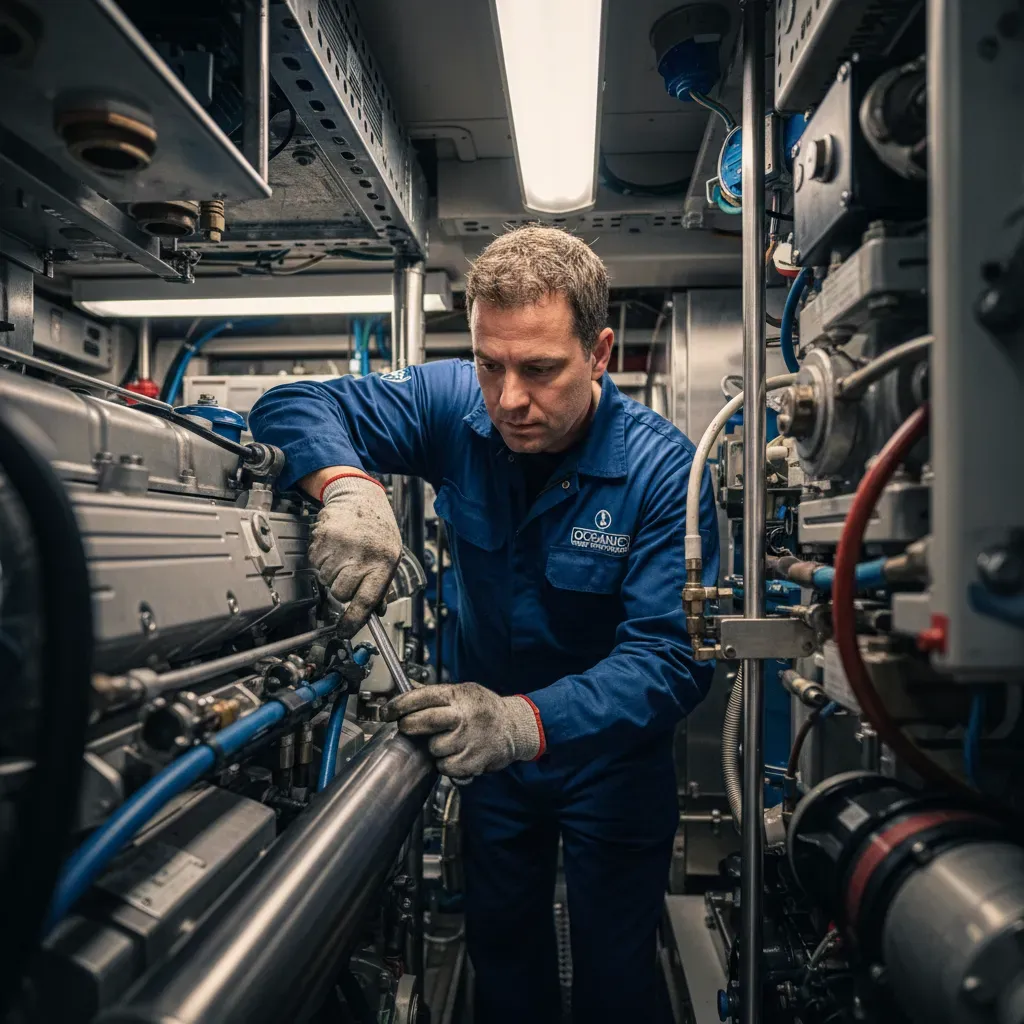
Engines, generators, hull, deck equipment, navigation systems, HVAC, onboard electronics. All of it needs planned maintenance, and all of it will occasionally need reactive fixes. A preventive maintenance programme tied to engine hours and calendar intervals keeps small problems from turning into expensive ones and protects resale value.
The basics:
- Annual haul-out and antifouling
- Engine servicing per manufacturer recommendations
- Class survey preparation and follow-up
- Refit planning and project management
- Spare parts inventory tracking
For a detailed maintenance framework, see our Yacht Maintenance and Safety Guide.
2. Crew management
People are always the complicated part. Recruitment, certificate verification (STCW, ENG1), payroll, rotation planning, performance reviews, training programmes.

Get crew management right and people stay. Get it wrong and you are recruiting constantly. Replacing one crew member costs EUR 5,000 to EUR 15,000 once you factor in agency fees, flights, and onboarding time. Do that three times a season and you have blown a hole in the budget.
For crew structures and retention strategies, see our Yacht Crew Management guide.
3. Financial management
Ownership costs go well past the purchase price, and they have a way of creeping up when you are not watching. Budgeting, expense tracking, invoice processing, VAT and tax planning, financial reporting. If the financial side is not transparent, you will not know where the money goes until it is gone.
Items typically tracked:
- Crew salaries and social contributions
- Fuel and lubricants
- Marina and port fees
- Insurance premiums
- Maintenance and repair costs
- Provisions and consumables
- Management fees
For a full cost breakdown, see our Yacht Prices and Ownership Costs Guide.
4. Operational management
Daily operations keep the yacht moving. Voyage planning, port entry and exit procedures, provisioning, guest programme coordination, logistics support. For charter yachts, add booking coordination, guest communications, and turnaround planning.
If you run a charter operation, our Charter Yacht Operations Guide covers operational details.
5. Compliance and administration
This one does not forgive mistakes. Flag state registration, ISM certification, MLC (Maritime Labour Convention) obligations, insurance documents, class surveys, safety equipment certificates. Miss a single survey date and your yacht can be detained, fined, or have its insurance voided. Sometimes all three.
Self-management vs hiring a company
This comes up early for every yacht owner. The answer depends on your yacht’s size, how much time you can realistically commit, what you know about boats, and what you are willing to spend.
| Factor | Self-management | Management company |
|---|---|---|
| Best for | Under 24m, hands-on owners | Over 24m, absentee owners |
| Control | Full control over every decision | Delegated, supported by reporting |
| Cost | Lower direct fees, high time investment | 5-15% of annual operating budget |
| Expertise | Depends on owner’s knowledge | Professional maritime expertise |
| Compliance | Owner’s responsibility | Company handles ISM and flag state |
| Crew | Direct relationship | Company manages HR and payroll |
| Scalability | Hard with multiple yachts | Built for fleet management |
| Emergency response | Limited to owner’s network | 24/7 support with established contacts |
When self-management works
Below 24 metres, for owners who enjoy being involved with their boat, self-management is perfectly viable. If you have sailing or maritime experience, live near the home port, and have the time for maintenance, provisioning, and paperwork, managing your own yacht saves money and keeps you close to the boat.
The honest question is whether you will keep it up. Plenty of owners start with enthusiasm and hit a wall after a year or two. Especially when unexpected repairs, crew issues, and regulation changes pile up at the same time.
When a company makes sense
Above 24 metres, on yachts registered under flags that require ISM compliance, or for owners who spend limited time aboard, a professional management company takes a real load off. Management fees typically run between 5% and 15% of the annual operating budget. That fee often pays for itself through better-negotiated service contracts, fewer emergency repairs, and proper compliance tracking.
For a firm evaluation guide, see How to Choose a Yacht Management Company.
What a yacht management company actually does
It varies between firms, but a full-service company will generally take on the technical side (maintenance planning, refit oversight, dry dock coordination), crew HR (recruitment, contracts, payroll, certificate tracking), financials (budgeting, monthly reporting, invoice processing, tax), insurance (policy negotiation, renewals, claims), compliance (flag state registration, ISM/ISPS, MLC), and day-to-day ops like voyage planning, provisioning, and guest services. If the yacht charters, add marketing, bookings, and guest vetting to that list.
Most firms work on a management fee plus cost pass-through model. The management fee covers the company’s expertise and coordination. Actual operating expenses (crew, fuel, marina, maintenance) are billed at cost with supporting documentation.
Yacht management costs
Management costs move a lot depending on yacht size, cruising region, and how much you actually use the boat. These are annual management fees only, separate from operating expenses.
| Yacht size | Annual management fee (approx.) | Notes |
|---|---|---|
| 24-30m | EUR 60,000 - 120,000 | Usually a fixed fee |
| 30-45m | EUR 120,000 - 200,000 | Fixed or percentage-based |
| 45-60m | EUR 200,000 - 350,000 | Typically a percentage of operating budget |
| 60m+ | EUR 350,000 - 600,000+ | Full service, dedicated team |
These are management fees only. Total annual operating costs (crew, fuel, maintenance, insurance, marina) typically land between 8% and 12% of the yacht’s purchase price. You will hear people quote a “10% rule” but treat it as a starting point, not a guarantee. A 50-metre motor yacht in good condition can still cost between EUR 1.5 million and EUR 2.5 million per year to run, management included.
What moves the number:
- Cruising region: Mediterranean marinas cost more than Caribbean anchorages
- Usage intensity: a yacht running 1,500 engine hours per year costs far more to maintain than one running 500
- Crew size: usually the single biggest expense line
- Yacht age: older yachts need more maintenance and more unplanned repairs
ISM Code and flag state requirements
The International Safety Management (ISM) Code is mandatory for commercial yachts and yachts above 500 GT (Gross Tonnage). It requires a documented Safety Management System (SMS) covering:
- Safety and environmental protection policies
- Defined responsibilities and authority
- Emergency preparedness procedures
- Incident reporting and analysis
- Maintenance procedures
- Document control
- Internal audits
Each flag state (the country where the yacht is registered) adds its own requirements. Popular yacht flags:
- Cayman Islands: Common among superyachts. ISM compliance mandatory for commercial vessels.
- Marshall Islands: Flexible structure, reputable maritime administration.
- Malta: EU flag. VAT advantages for EU-based owners. Growing superyacht registry.
- Red Ensign Group (UK, Isle of Man, Gibraltar): High standards, globally recognised.
Flag state compliance is not a one-off exercise. Annual audits, periodic surveys, and document renewals require ongoing attention. One missed survey can mean your yacht cannot legally put to sea.
Seasonal vs year-round management
Your management approach should match how and when you use the yacht.
Year-round management
For yachts that cross between seasons (Med in summer, Caribbean in winter) or stay in commission all year, continuous management is necessary. Crew stay in rotation, maintenance runs on an ongoing schedule, and the yacht is ready at any time.
Year-round management costs more. But it keeps the yacht in top condition and eliminates the expensive recommissioning process at the start of each season.
Seasonal management
If your yacht only operates during a specific window (say, May to October in the Mediterranean), seasonal management can cut costs. Off-season, the yacht is “laid up” (winterised), crew is reduced, or a skeleton watch crew stays aboard.
The trade-off: spring recommissioning takes time and money. Systems that sit idle for months can develop problems. Budget 2-4 weeks and EUR 15,000-50,000 for a spring recommissioning, depending on size.
A mixed approach
Many owners land somewhere in between: full management during the cruising season, reduced oversight during lay-up, and a defined maintenance and survey programme for the off-season. It balances cost control with asset protection.
How software is changing yacht management
Yacht management used to run on spreadsheets, paper logbooks, and phone calls. A lot of phone calls. That has been changing over the past few years as purpose-built software has matured enough to actually be worth using.
The biggest shift is maintenance tracking. Software that ties reminders to engine hours and calendar intervals means fewer things slip through the cracks. Certificate expiry alerts stop you from discovering a lapsed STCW cert the day before departure. Real-time expense tracking lets you compare budget to actual without waiting for a monthly PDF from your accountant.
But the real value is pattern recognition. When maintenance data sits in a connected system, you notice things. An engine burning more oil than it did six months ago, for example. You catch it in the numbers before it turns into a EUR 40,000 repair.
Marinix OS is built around this idea. It puts maintenance, crew, financials, compliance, and operations in one place, so the owner and the captain are looking at the same picture regardless of where they are.
For a detailed comparison of available tools, see our Yacht Management Software guide.
Picking the right management agreement
The management agreement is where the relationship with a management company gets real. A good one protects both sides. A vague one creates arguments. Here is what to pay attention to.
Scope of services
Define exactly what is included. Vague phrases like “full management services” create disputes. List every deliverable: maintenance coordination, crew management, financial reporting frequency, insurance tracking, compliance management.
Fee structure
Understand how you will be charged:
- Fixed fee: predictable, but may not cover unexpected situations
- Percentage of operating budget: aligns incentives (debatable), but can inflate costs
- Hybrid: fixed base fee plus a percentage above a certain threshold
Reporting and transparency
Demand:
- Detailed monthly financial reports with line items
- Quarterly technical reports showing maintenance status
- Annual budget vs actual reconciliation
- Access to a digital management platform (real-time, not just periodic reports)
Termination clause
Look for reasonable notice periods (typically 3-6 months) and clear handover procedures. Avoid contracts that lock you in for multiple years without performance benchmarks.
Liability and insurance
Clarify who is responsible for management errors, crew negligence, and third-party claims. Make sure the management company carries professional indemnity insurance.
Purchasing authority
Set clear spending limits. Routine purchases below a certain threshold (say, EUR 5,000) should be pre-approved. Larger expenditures should require owner approval with competitive quotes.
Regional differences
Where you cruise changes everything. Costs, regulations, the availability of decent service, even when the season starts and ends.
The Mediterranean
Still the biggest yachting market by a wide margin. Marina fees hurt (EUR 50-300+ per metre per night in peak season), but you can find a shipyard or service provider within a day’s cruise of almost anywhere. EU regulations apply to EU-flagged vessels. Summers are packed, winters are quiet.
The Caribbean
Lower operating costs than the Med. Relaxed anchoring culture. But specialist services can be hard to find on smaller islands. Hurricane season (June to November) demands careful planning. You either move the yacht out of the region or carry comprehensive insurance.
Northern Europe
Shorter season and higher labour costs, but the shipyard quality is hard to beat, especially in the Netherlands, Germany, and the UK. Regulatory environment is strict, which is a pain until you need it to work in your favour.
The Gulf and Middle East
You can operate year-round, though summers are brutal. Dubai and Abu Dhabi have modern marina infrastructure and the scene has grown fast. If you want to charter in Dubai, you will need a DMCA licence.
Turkey
Getting more popular with owners looking for quality yard work without Med-Europe prices. Bodrum, Gocek, and Marmaris all have established yachting infrastructure. Be aware that Turkish regulations (Cabotage Law, Harbour Master requirements) differ from EU standards, so if you are coming from an EU-flagged setup, there is a learning curve.
For a Turkey-specific guide, see Choosing a Yacht Management Company in Turkey.
Wrapping up
Nobody buys a yacht because they want to manage one. They buy it to be on the water. But the management part does not go away just because you ignore it. It gets more expensive.
The approach matters less than the consistency. Self-manage or hire a firm. Use software or use a spreadsheet. What actually makes the difference is having a system you stick with, one that covers the technical, the financial, the crew, and the compliance side without letting any of them fall through.
If you want a single place for all of that, Marinix OS handles the tracking so you can spend less time on admin and more time doing the thing you bought the yacht for.
FAQ
What does a yacht management company do?
Short answer: everything the owner does not want to deal with. That usually means maintenance coordination, crew recruitment and payroll, financial reporting, insurance, flag state compliance, and voyage planning. How much you hand over is up to you. Some owners go full-service. Others keep the financial side in-house and outsource the rest.
How much does yacht management cost?
Management fees alone run from about EUR 60,000 a year for a 24-metre yacht up to EUR 600,000+ for 60-metre-plus superyachts. That is just the management fee. Total operating costs (crew, fuel, maintenance, marina, insurance) on top of that usually land somewhere between 8% and 12% of what you paid for the boat. Where you cruise and how hard you use the yacht move those numbers a lot.
Can I manage my yacht without a management company?
Yes, particularly for yachts under 24 metres. Owners with maritime knowledge, proximity to the home port, and enough time can manage their own yachts effectively. However, commercially operated yachts above 500 GT are legally required to have ISM-compliant management. In practice, that means either hiring a qualified management company or building a certified management system in-house with qualified personnel.
What is the ISM Code and does it apply to my yacht?
The ISM Code is the international standard for safe ship management and operation. It applies to all commercial yachts and yachts above 500 GT. Even if yours falls below those thresholds, adopting ISM principles (documented procedures, regular audits, incident reporting) tends to help with insurance. Underwriters like seeing that kind of paperwork.
How do I choose between seasonal and year-round management?
Depends on how you use the yacht. If you cruise year-round or cross oceans seasonally, you need continuous management. If you only use it May to October, seasonal management saves money during the lay-up months, but you will pay EUR 15,000-50,000+ to recommission in the spring. A lot of owners split the difference: full management in season, reduced oversight during lay-up, with a maintenance schedule that keeps the off-season productive.