Yacht crew management: hiring, training & retention guide
Your yacht is only as good as the people running it. The engines, the navigation gear, the hull, none of it matters much if the crew cannot work together or stick around longer than one season. Crew management is where most yacht owners struggle. The technical side is predictable. People are not.
This guide covers the practical side of yacht crew management: who you need, how to find them, what paperwork matters, what to pay them, and how to keep the good ones from leaving.
Contents
- Crew positions and what each one actually does
- Hiring the right crew
- STCW certification and what is required
- MLC 2006 compliance
- Salary benchmarks by position and yacht size
- Performance tracking and reviews
- Rotation planning
- Retention: why good crew leave and how to stop it
- How software helps with crew management
- FAQ
Crew positions and what each one actually does
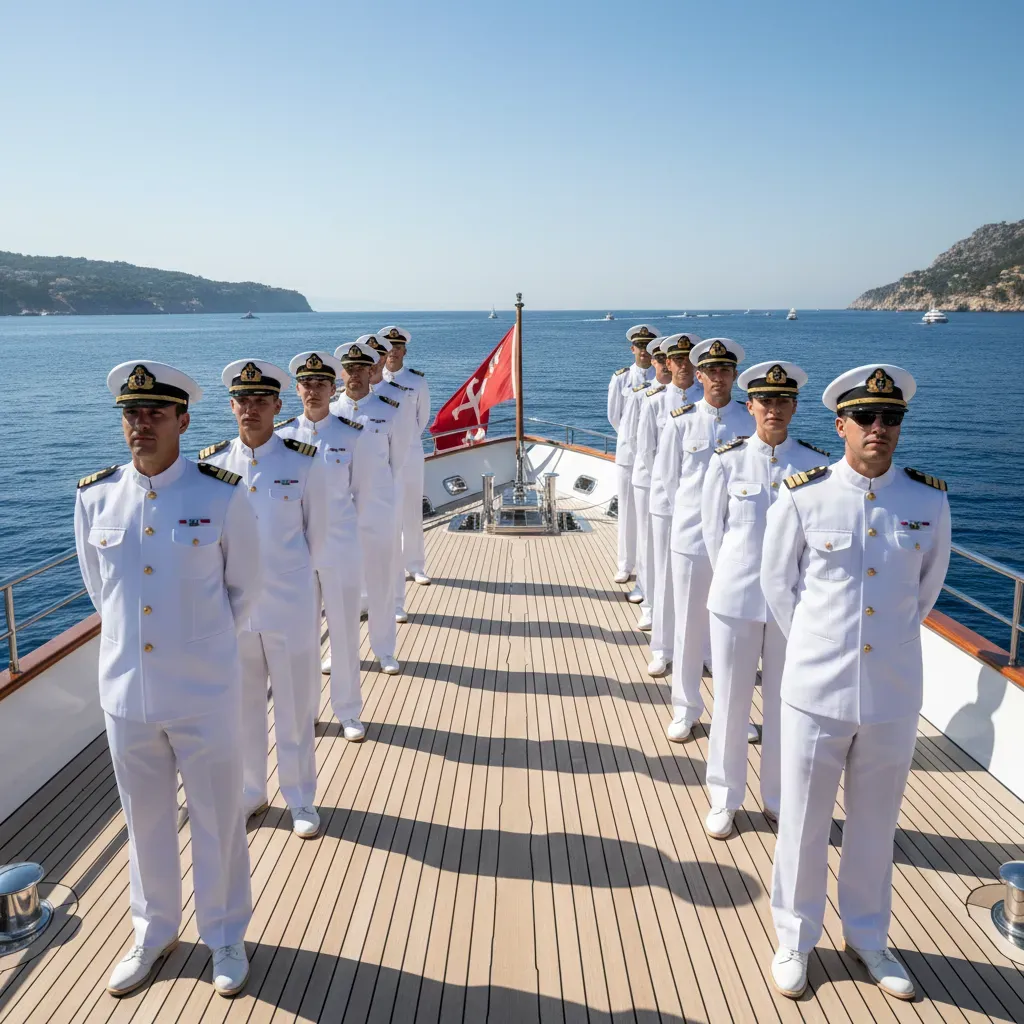
Crew structure depends on yacht size. A 24-metre sailing yacht might run with a captain and one deckhand. A 60-metre motor yacht needs twelve to fifteen people, sometimes more during charter season. Here is what a typical superyacht crew looks like.
| Position | Responsibility | Typical on yachts |
|---|---|---|
| Captain | Overall command, navigation, safety, compliance, guest relations | All sizes |
| Chief Officer (Mate) | Deck operations, watchkeeping, safety equipment, tender ops | 30m+ |
| Bosun | Deck maintenance, anchor handling, water toys | 35m+ |
| Deckhand | General deck work, line handling, cleaning | 24m+ |
| Chief Engineer | Engine room, mechanical and electrical systems, maintenance logs | 30m+ |
| 2nd Engineer | Assists chief engineer, handles day-to-day technical tasks | 45m+ |
| Chief Steward/ess | Interior management, housekeeping, laundry, provisioning | 30m+ |
| Steward/ess | Service, cabin care, table setting | 30m+ |
| Chef | Galley, menu planning, provisioning, dietary requirements | 30m+ |
| ETO (Electro-Technical Officer) | AV systems, IT, communication equipment | 50m+ |
On a 40-metre yacht, you are looking at roughly six to eight crew. Push past 50 metres and the number jumps to ten or more. Charter yachts tend to run heavier on interior crew because guest service standards are higher.
The captain sets the tone for everything. A technically competent captain who cannot manage people will drain your crew faster than any other problem. When hiring, weigh leadership ability at least as heavily as sea miles.
Hiring the right crew
Finding crew is not the hard part. Finding crew who are qualified, reliable, and actually fit your yacht, that takes more effort than most owners expect.
Where to look
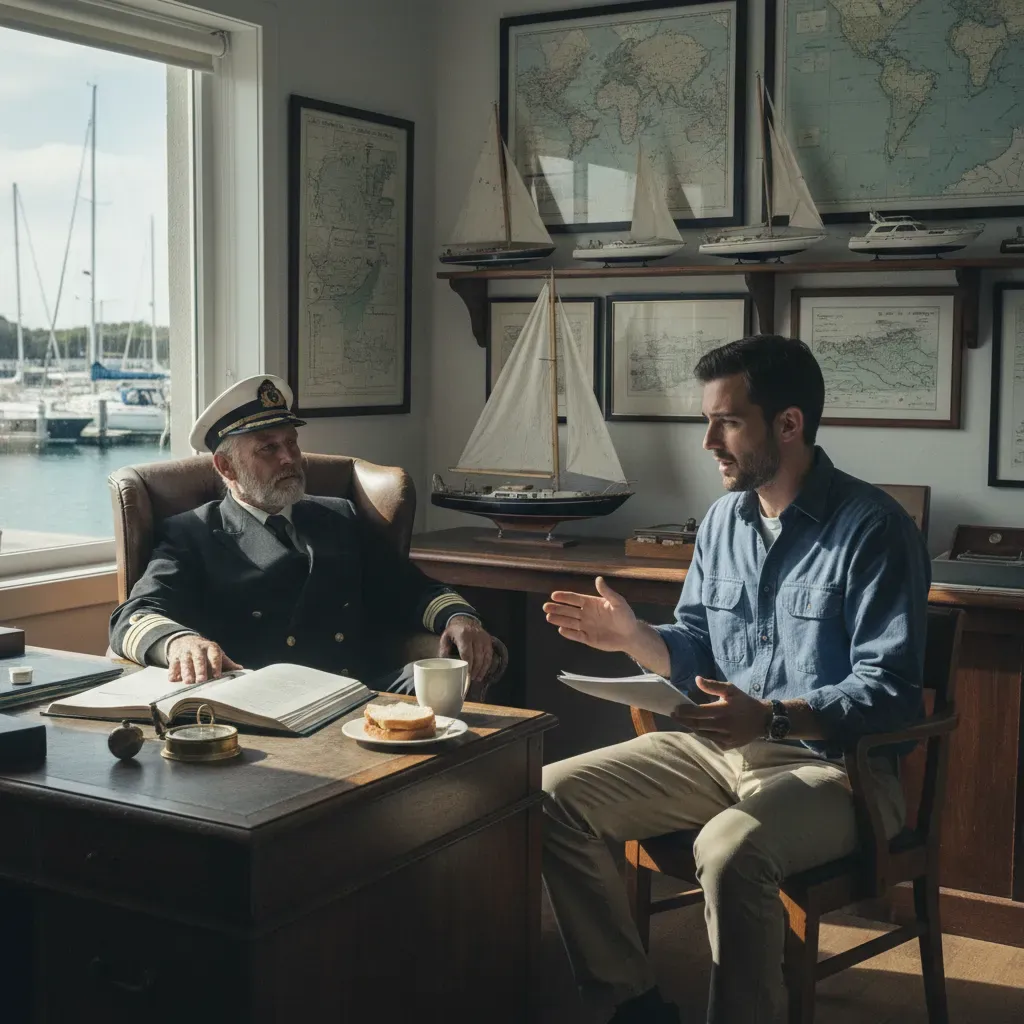
Crew agencies are the traditional route. Agencies like Crew4Yachts, YachtCrewLink, and Dockwalk maintain databases of vetted candidates. Expect a placement fee of one to two months’ salary. Word of mouth is still the most reliable method though. Captains know other captains. A recommendation from someone you trust is worth more than any CV.
Online platforms like Yachtie World and crew Facebook groups have expanded the pool, but the vetting burden falls on you. And do not overlook boat shows and crew events in Antibes, Fort Lauderdale, or Palma. These events are as much about networking for crew as they are about selling boats.
What to check before hiring
Certificates first: STCW, ENG1 (or equivalent medical), relevant CoC. Non-negotiable. Then call previous captains or owners for references. Written references are worth less than a five-minute phone call.
Logged sea time matters more than shore-based courses. Ask for specific yacht experience, not just generic maritime background. And pay attention to personality. On a yacht, people live and work in close quarters for weeks at a time. Skills can be taught. Temperament cannot. A trial period of two to four weeks is standard and worth every day of it.
Most management companies also require pre-employment drug and alcohol screening. Many flag states have zero-tolerance regulations on this.
Common hiring mistakes
Rushing to fill a position is the biggest one. A vacant berth is disruptive, but a bad hire is worse. The other mistake owners keep making is weighting technical skills too heavily and ignoring interpersonal dynamics. And check references properly: call the number on the CV, do not just read the letter.
STCW certification and what is required
STCW stands for Standards of Training, Certification and Watchkeeping. It is the international framework that sets minimum training and qualification standards for seafarers. If your crew works on a commercially operated yacht or a yacht above 500 GT, STCW certification is mandatory.
The basics every crew member needs
STCW Basic Safety Training covers four modules:
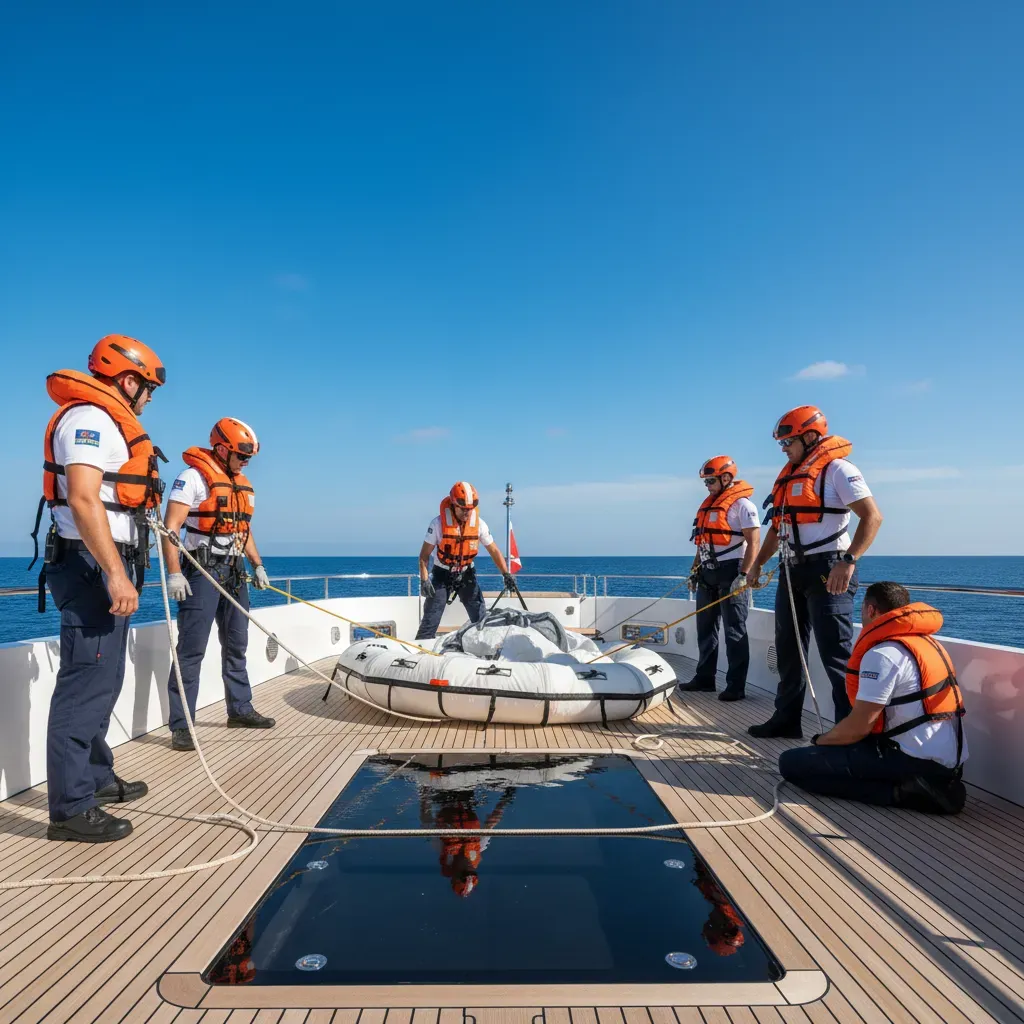
- Personal Survival Techniques (PST) — life raft deployment, survival at sea, hypothermia prevention
- Fire Prevention and Fire Fighting — using extinguishers, breathing apparatus, fire team coordination
- Elementary First Aid — CPR, wound treatment, stabilisation
- Personal Safety and Social Responsibilities (PSSR) — shipboard safety procedures, environmental awareness
These certificates are valid for five years and must be refreshed before they expire. A crew member with a lapsed STCW cert is, legally speaking, not qualified to work.
Beyond the basics
Depending on the position, crew may also need:
- Proficiency in Survival Craft (PSCRB) — mandatory for anyone designated to operate lifeboats or rescue boats
- Advanced Fire Fighting — required for officers
- Medical Care (STCW A-VI/4) — for vessels without a dedicated medic
- GMDSS (Global Maritime Distress and Safety System) — radio operator certificate, usually held by the captain and mate
- Certificate of Competency (CoC) — deck or engineering officer certificates issued by flag states
Track all of this. Seriously. One expired certificate can ground your yacht during a port state inspection. A spreadsheet works for a while, but once you have eight crew with five certificates each, things start slipping. A crew management system that sends automatic renewal alerts saves you from the kind of surprise that ruins a charter week.
For a broader look at maritime compliance, see our Yacht Management: Complete Guide.
MLC 2006 compliance
The Maritime Labour Convention sets out seafarers’ rights regarding working conditions, accommodation, wages, health, and social security. If your yacht is 500 GT or above, or if it is commercially operated, MLC applies. Even on private yachts below the threshold, following MLC principles is increasingly expected by insurers and flag states.
What MLC requires in practice
Every crew member needs a written Seafarer Employment Agreement (SEA) specifying duties, wages, leave, repatriation terms, and notice periods. Working hours are capped at 14 hours in any 24-hour period and 72 hours in any 7-day period. Rest periods must be recorded.
Crew cabins have to meet minimum size standards. Food must be adequate in quantity and quality. These are auditable requirements, not suggestions. Medical care must be accessible ashore, and the yacht must maintain a medicine chest to flag state standards with designated first aiders on board.
If the employment ends abroad, the employer covers the cost of getting the crew member home. No exceptions. And crew must have access to an onboard complaint process with the ability to escalate to the flag state.
Practical compliance tips
Keep a crew hours log. Not because it is fun, but because it is the first thing an MLC inspector asks for. Make sure your SEAs are current and signed before anyone steps aboard. And maintain your crew accommodation — an inspector who sees a broken A/C in a crew cabin or a galley that is not up to standard will keep looking for more problems.
Salary benchmarks by position and yacht size
Crew salaries are the largest single expense on most yachts. They also vary widely depending on yacht size, cruising region, whether the yacht charters, and individual experience. These ranges give you a starting point for 2025-2026.
| Position | 30-40m yacht (EUR/month) | 40-55m yacht (EUR/month) | 55m+ yacht (EUR/month) |
|---|---|---|---|
| Captain | 8,000 - 12,000 | 12,000 - 18,000 | 16,000 - 25,000+ |
| Chief Officer | 4,500 - 6,500 | 5,500 - 8,000 | 7,000 - 10,000 |
| Bosun | 3,500 - 4,500 | 4,000 - 5,500 | 5,000 - 7,000 |
| Chief Engineer | 6,000 - 9,000 | 8,000 - 13,000 | 12,000 - 18,000 |
| Chef | 4,500 - 7,000 | 6,000 - 10,000 | 8,000 - 14,000 |
| Chief Steward/ess | 4,000 - 5,500 | 5,000 - 7,000 | 6,000 - 9,000 |
| Deckhand | 2,500 - 3,500 | 3,000 - 4,000 | 3,500 - 5,000 |
| Steward/ess | 2,500 - 3,500 | 3,000 - 4,000 | 3,500 - 5,000 |
Charter yachts often pay on the lower end of base salary because crew earn tips on top. Private yachts tend to pay higher base salaries with no tip expectation. In both cases, crew receive accommodation and meals on board, which is part of the compensation package even if it does not show up on the payslip.
Do not forget the extras: flights for rotation, health insurance, pension contributions (required under MLC for some flag states), uniform allowances, and training costs. All of it adds up. On a 45-metre yacht with a crew of eight, total annual crew costs — salaries plus all the associated expenses — can easily reach EUR 500,000 to EUR 700,000.
For a full cost breakdown across all expense categories, see our Yacht Prices and Ownership Costs Guide.
Performance tracking and reviews
Most yacht owners invest heavily in hiring and almost nothing in performance management. That is a missed opportunity. Regular reviews help you catch problems early and give crew a clear sense of where they stand.
What to track
Technical competence is the obvious starting point: can they do the job they were hired for? Are their skills current? Beyond that, look at safety compliance (following procedures, participating in drills without being reminded), guest feedback on charter yachts, teamwork, and initiative. Crew who spot problems before they are told about them are worth their weight in fuel.
Review cadence
Do an honest review at the end of the first month. After that, quarterly check-ins work well, fifteen minutes, face to face, informal but documented. The annual formal review should be comprehensive and tied to contract renewal discussions.
Document everything. If you ever need to terminate a crew member for performance reasons, the paper trail makes the process cleaner and protects you from disputes.
Rotation planning
On yachts that operate year-round, crew cannot work continuously without burning out. Rotation planning keeps the yacht staffed while giving people the downtime they need.
Common rotation patterns
- 2 months on / 1 month off: The most common pattern on superyachts. Crew work two months, then fly home for a month while a relief fills their position.
- 6 weeks on / 3 weeks off: Popular on busy charter yachts where the pace is intense.
- Seasonal: Some yachts hire full crews for the charter season (May-October in the Med) and run a skeleton crew during lay-up.
Making rotation work
The logistics are not trivial. You need relief crew who know the yacht, flights booked and managed, handover procedures that actually transfer knowledge, and schedules that account for charter bookings and maintenance windows.
Handover is where rotation breaks down most often. The outgoing engineer says “the port generator has been acting up” but does not document what they tried. The incoming engineer starts from scratch. A digital logbook or crew management system that stores handover notes, maintenance status, and ongoing issues makes this problem smaller.
If you manage multiple yachts and need to coordinate crew across a fleet, our Yacht Fleet Management guide covers the organisational side.
Retention: why good crew leave and how to stop it
Replacing a crew member is expensive. Agency fees, flights, onboarding time, the disruption to the rest of the team. Depending on the position, the total cost of replacement runs between EUR 5,000 and EUR 15,000. Do that several times a season and you are burning money that could have been spent on keeping people happy in the first place.
The real reasons crew leave
Ask around in any marina and you will hear the same things:
- Poor management from the captain or owner. Micromanagement, unclear expectations, or — worse — no expectations at all.
- Below-market pay. People talk. If your deckhand finds out the yacht next door pays EUR 500 more per month, they will start thinking.
- Inadequate time off. Burnout is real. Crew who never get proper leave will leave permanently.
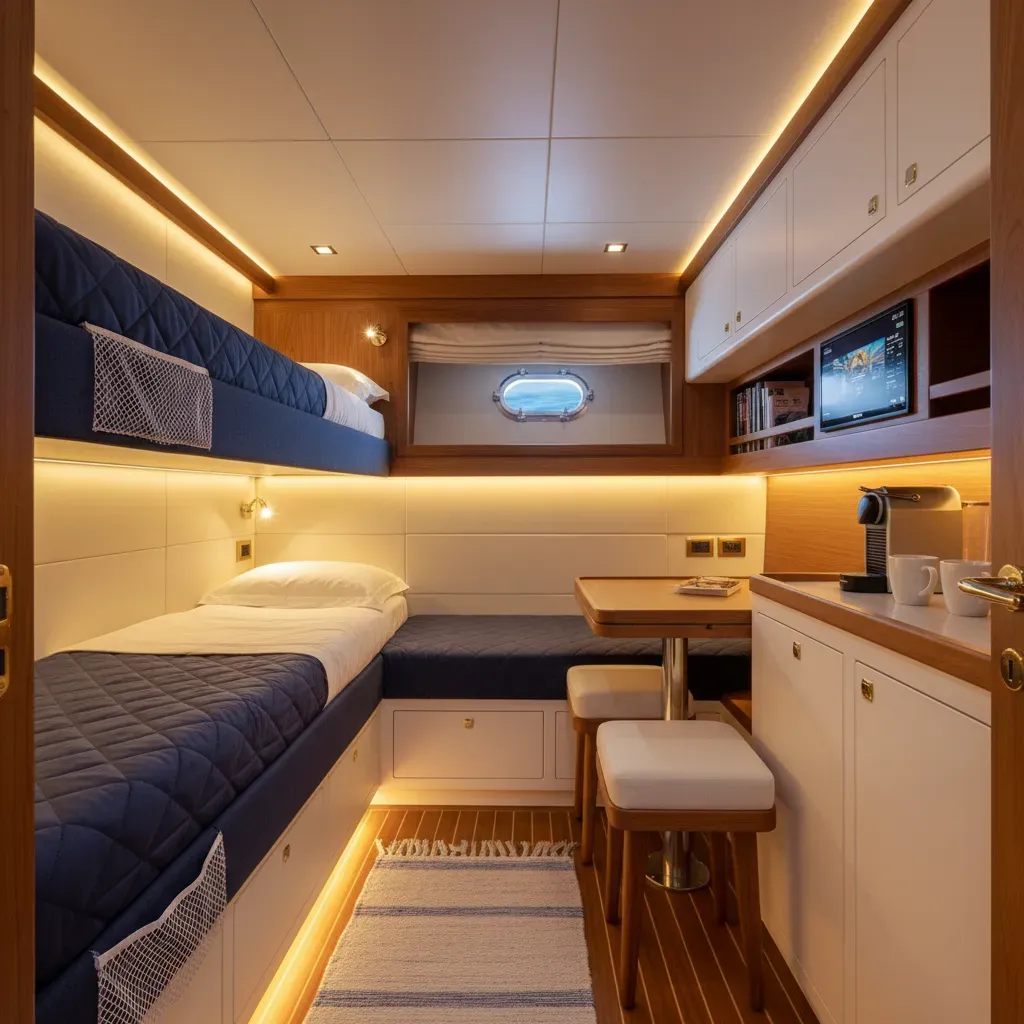
- Bad living conditions. Small cabins are expected on yachts. Broken air conditioning, mouldy mattresses, and no privacy are not.
- No career development. Ambitious crew want to move up. If there is no path from deckhand to bosun to mate, they will find a yacht that offers one.
- Toxic crew dynamics. One difficult personality in a small crew is enough to drive others out.
What actually works for retention
Pay fairly. You do not need to be the highest-paying yacht in the marina, but you need to be competitive and transparent about it. Respect rest time: stick to the rotation schedule, and do not cancel leave for non-emergencies.
Fund certificate upgrades. Send crew to courses. It costs money, but it builds loyalty and capability at the same time. Keep the crew mess and cabins in good condition. Those spaces are their home for months at a time.
People want to know how they are doing. Regular reviews are retention tools as much as performance tools. And handle conflicts early. A captain who avoids confrontation creates a worse problem than the confrontation itself.
The yachts with the lowest turnover tend to be the ones where the basics are consistently done well. None of this is complicated. It just takes follow-through.
How software helps with crew management
Spreadsheets and WhatsApp groups work for a while. Once you are tracking certificates for eight or more crew, managing rotation schedules, processing payroll, and logging working hours for MLC compliance, the manual approach starts costing you time and creating risk.
A crew management system handles certificate tracking with automatic expiry alerts, working hours logging, rotation scheduling with handover documentation, payroll, performance review records, and document storage for SEAs, passports, and medical certificates.
The point is not the software. The point is that an STCW cert expiring next month gets flagged today, not discovered during a port inspection.
Marinix OS includes a crew management module that ties into the rest of the yacht’s operations: maintenance, finances, compliance. Crew data does not live in isolation. When the engineer logs engine hours, that feeds into the maintenance schedule. When crew hours are recorded, the system flags MLC limits before they are breached.
For a comparison of yacht management platforms, see our Yacht Management Software guide.
FAQ
How many crew does a yacht need?
There is no fixed formula, but a common rule of thumb is one crew member per 5 metres of yacht length for motor yachts, slightly less for sailing yachts. A 40-metre motor yacht typically runs with seven to nine crew. Charter yachts lean toward the higher end because of service expectations. The actual number depends on the yacht’s complexity, how it is used, and local regulations.
What certificates does yacht crew need?
At minimum, every crew member needs STCW Basic Safety Training. Officers need Certificates of Competency (CoC) appropriate to their rank and the yacht’s tonnage. Engineers need equivalent engineering certificates. Everyone needs a valid ENG1 medical or flag state equivalent. Charter yachts may have additional requirements depending on the operating jurisdiction.
How much does yacht crew cost per year?
Total annual crew costs on a 40-metre yacht with a crew of six to eight typically fall between EUR 400,000 and EUR 700,000. That includes base salaries, social contributions, flights, health insurance, training, uniforms, and provisioning. Crew costs usually represent 40% to 50% of total annual operating expenses, making it the single largest line item in most yacht budgets.
What is MLC 2006 and does it apply to my yacht?
The Maritime Labour Convention (MLC) 2006 sets international standards for seafarers’ working conditions, including employment agreements, working hours, accommodation, and repatriation. It applies to all commercially operated yachts and yachts of 500 GT and above. Even below these thresholds, many flag states and insurers expect compliance with MLC principles. In practice, following MLC protects both the owner and the crew.
How do I reduce crew turnover on my yacht?
Pay competitively, respect rest schedules, invest in training, maintain crew living spaces, and give regular feedback. Most crew do not leave over money alone. They leave because of poor management, burnout, or feeling stuck. Fair rotation planning and a captain who actually deals with crew issues will do more for retention than any single pay raise.