Yacht prices & ownership costs: what you’ll really pay in 2026
Everyone who has ever looked at a yacht listing has done the same mental arithmetic. Purchase price, divided by the number of weekends you will actually use it, equals a number you would rather not think about. But that purchase price is only the starting point. Crew salaries, insurance, marina fees, maintenance, fuel, and a dozen smaller line items add up fast. The yacht ownership costs that catch people off guard are rarely the ones they planned for.
What follows is a realistic breakdown of what yachts actually cost to buy and run in 2026. Not averages pulled from thin air. Actual ranges based on yacht size, type, and how you plan to use it. Whether you are weighing up a purchase, already own and want to benchmark your spending, or just wondering what that 50-metre motor yacht in the harbour costs its owner each year, the numbers are here.
Contents
- What does a yacht actually cost to buy?
- The 10% rule: how accurate is it?
- Annual running costs broken down
- New vs pre-owned: what the price gap really looks like
- Hidden costs most buyers miss
- Regional cost differences
- Offsetting costs with charter income
- Five-year total cost of ownership example
- How to track and control your costs
- FAQ
What does a yacht actually cost to buy?
Yacht prices swing wildly depending on length, builder, age, and specification. A 30-foot sailing yacht and a 100-foot motor yacht are completely different financial propositions. The table below gives a realistic snapshot for 2026.
| Size category | Type | New build price range | Pre-owned price range |
|---|---|---|---|
| 30–40 ft | Sailing yacht | €150,000–€500,000 | €60,000–€250,000 |
| 30–40 ft | Motor yacht | €200,000–€700,000 | €80,000–€350,000 |
| 40–60 ft | Sailing yacht | €500,000–€2,000,000 | €200,000–€900,000 |
| 40–60 ft | Motor yacht | €700,000–€3,500,000 | €300,000–€1,500,000 |
| 60–80 ft | Motor yacht | €3,000,000–€10,000,000 | €1,500,000–€5,000,000 |
| 80–100 ft | Motor yacht / Superyacht | €10,000,000–€30,000,000 | €5,000,000–€15,000,000 |
| 100 ft+ | Superyacht | €30,000,000+ | €10,000,000+ |
A few things to notice. The gap between new and pre-owned widens as yachts get larger. A well-maintained 15-year-old 70-foot motor yacht can sell for 40–50% less than its original build cost, while a 35-foot sailing yacht of the same age might hold 50–60% of its value. Builder reputation matters too. A Benetti or Feadship holds value differently than a lesser-known yard.
Custom builds add another layer. A semi-custom 80-footer from a European yard might cost €15 million, while a full custom of the same length could reach €25 million or more depending on specification. Most buyers in this bracket underestimate how much specification drives the final number.
The 10% rule: how accurate is it?
You will hear this one repeatedly: annual running costs are roughly 10% of the yacht’s purchase price. It is one of those rules of thumb that is simple enough to remember and just inaccurate enough to get you into trouble.
For smaller yachts, say under 50 feet, the rule tends to overestimate. A €400,000 motor yacht does not typically cost €40,000 per year to run unless you are logging serious miles or paying for a full-time captain. Closer to 6–8% is more realistic for coastal cruisers kept in the Mediterranean.
Above 80 feet, the rule flips and underestimates. A €20 million yacht with a crew of eight, two annual haul-outs, and a summer season in the western Med can easily run to €2.5–3 million per year. That is 12–15% of the purchase price.
Where the 10% rule breaks down:
- Crew-heavy yachts. Once you cross the threshold where full-time crew is required (typically around 24 metres), payroll becomes the single largest expense and it does not scale linearly with purchase price.
- Older yachts. A 20-year-old yacht bought at a discount will still need modern systems, and maintenance costs do not care what you paid for the hull.
- Infrequently used yachts. You save on fuel but not on marina fees, insurance, crew salaries, or depreciation.
The 10% figure works as a conversation starter. It should not be your budget.
Annual running costs broken down
So where does the money actually go? The table below shows typical annual operating costs by yacht size.
| Expense category | 40 ft motor yacht | 60 ft motor yacht | 80 ft superyacht | 100 ft+ superyacht |
|---|---|---|---|---|
| Crew | €0–€50,000 | €80,000–€180,000 | €250,000–€500,000 | €600,000–€1,200,000 |
| Fuel | €5,000–€15,000 | €20,000–€60,000 | €60,000–€150,000 | €150,000–€400,000 |
| Insurance | €3,000–€8,000 | €15,000–€35,000 | €50,000–€120,000 | €120,000–€300,000 |
| Marina & berthing | €5,000–€20,000 | €20,000–€60,000 | €60,000–€200,000 | €150,000–€500,000 |
| Maintenance | €8,000–€25,000 | €30,000–€80,000 | €100,000–€300,000 | €250,000–€700,000 |
| Management fees | €0–€5,000 | €10,000–€30,000 | €50,000–€120,000 | €100,000–€250,000 |
| Miscellaneous | €3,000–€8,000 | €10,000–€25,000 | €30,000–€80,000 | €80,000–€200,000 |
| Total per year | €24,000–€131,000 | €185,000–€470,000 | €600,000–€1,470,000 | €1,450,000–€3,550,000 |
A few notes on these numbers.
Crew is the dominant cost once you pass 60 feet. A 40-foot yacht might have no full-time crew at all, or just a part-time captain. By 80 feet, you are looking at a captain, engineer, chef, and two or three deckhands at minimum. Salaries are only part of it — add social charges, flights, training, uniforms, and food. For a detailed breakdown, see our Yacht Crew Management guide.
Marina and berthing costs swing wildly by location. A winter berth in Montenegro costs a fraction of a summer berth in Monaco. Annual contracts in Turkey or Croatia can save 30–50% compared to the French Riviera for the same length of yacht.
Maintenance includes scheduled servicing, haul-outs, antifouling, engine servicing, and smaller repairs that come up throughout the year. What it does not include are major refits, which are a separate (and often much larger) budget item. For more on structuring your maintenance, take a look at our Yacht Maintenance and Safety Guide.
Miscellaneous covers everything from flag state fees and classification society surveys to satellite communications, provisions, laundry, and the endless stream of small purchases that keeps a yacht operational.
New vs pre-owned: what the price gap really looks like
Buying new means you get exactly what you want. Layout, systems, finish, all your choices. You also get a warranty and, usually, a yard that will sort out teething problems during the first year or two. What you give up is time and money. New builds take 18–36 months for semi-custom yachts and longer for full custom. You pay progress payments during construction, and the moment you take delivery, depreciation starts.
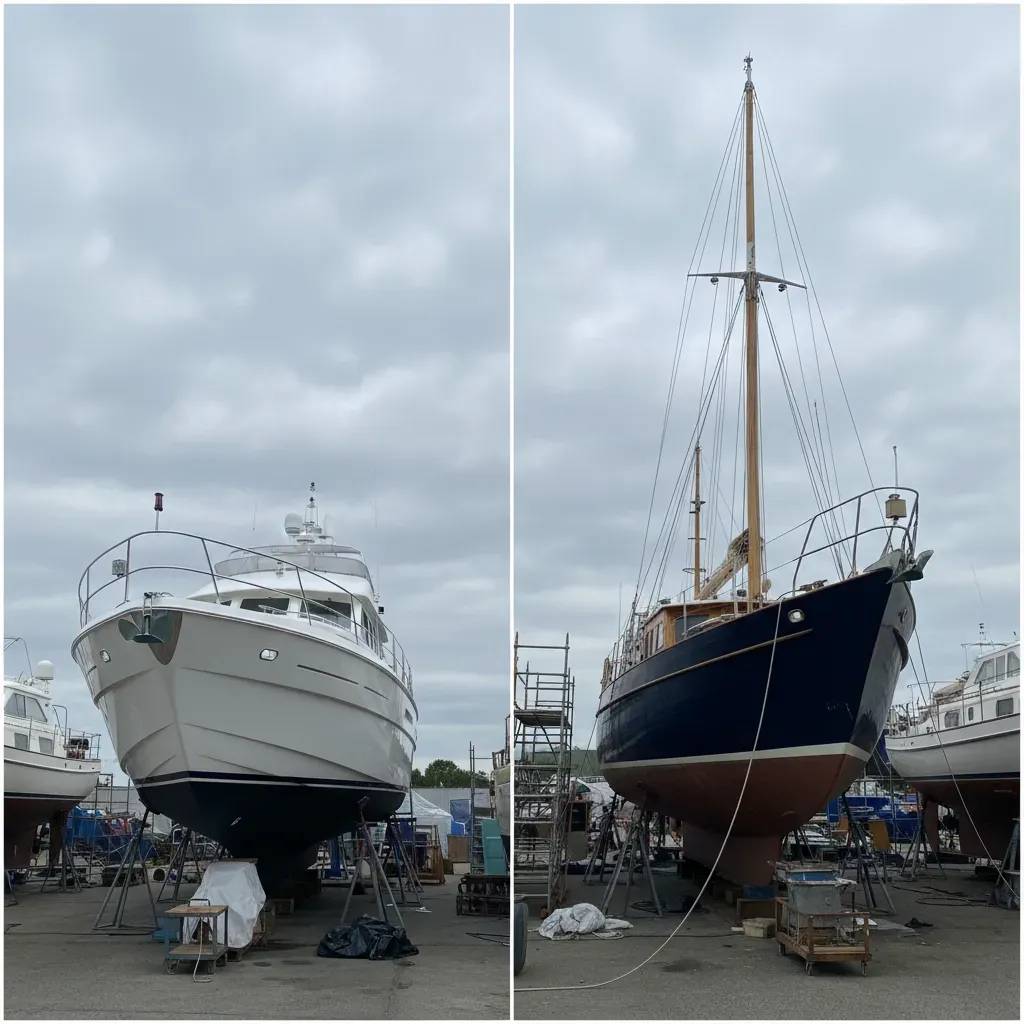
Pre-owned yachts are available now. A well-surveyed yacht from a reputable yard gets you most of what a new build offers at 50–60% of the cost. The catch is that older systems need upgrading, and you inherit someone else’s maintenance history, for better or worse.
The real cost comparison for a 70 ft motor yacht:
| Factor | New build | Pre-owned (10 years old) |
|---|---|---|
| Purchase price | €6,000,000 | €3,000,000 |
| Refit needed at purchase | €0 | €300,000–€600,000 |
| Depreciation (first 5 years) | €1,500,000–€2,000,000 | €500,000–€800,000 |
| Annual maintenance | €60,000–€100,000 | €80,000–€140,000 |
| Warranty coverage | 2 years | None |
| Delivery time | 24–30 months | Immediate |
The pre-owned yacht costs less upfront but more per year in maintenance. Over five years, the total outlay is often closer than people expect — but the cash flow profile is very different. New builds demand large payments during construction. Pre-owned yachts let you spread the cost, though unexpected repairs can hit hard.
One pattern that experienced buyers follow: purchase a 5–8 year old yacht from a top-tier yard, invest in a targeted refit (engines, electronics, soft furnishings), and run it for another 8–10 years. This avoids the steepest depreciation curve while keeping the yacht in strong condition.
Hidden costs most buyers miss
The purchase price and the running costs above are the numbers everyone talks about. The ones below tend to arrive later, usually without warning.
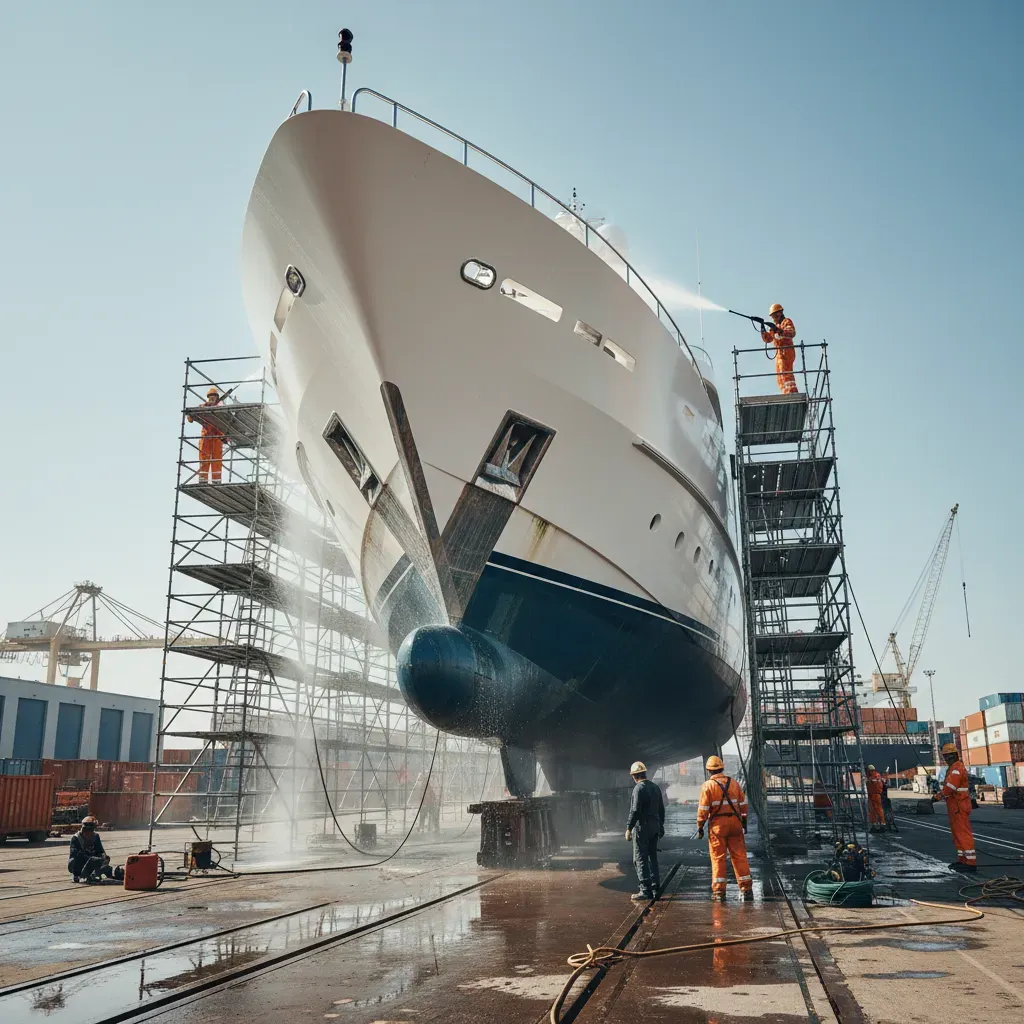
Major refit cycles. Every 5–7 years, a well-used yacht needs a significant refit. This is not routine maintenance — it is replacing teak decks, overhauling engines, upgrading navigation systems, repainting the hull. On a 60-foot motor yacht, budget €200,000–€500,000. On an 80-footer, €500,000–€1,500,000. This cost is lumpy and easy to ignore until the surveyor tells you it cannot wait another season.
Flag state and classification costs. Depending on your flag, you will face periodic surveys, tonnage taxes, and administrative fees. Changing flag — which owners sometimes do for tax or regulatory reasons — involves deregistration, re-registration, new surveys, and legal fees. Budget €20,000–€50,000 for a flag change on a yacht over 24 metres.
Crew turnover. Recruiting and training a new crew member costs money beyond their salary. Flight costs, agency fees, uniform provisioning, and the inevitable dip in performance during handover periods. High turnover yachts spend 15–25% more on crew-related costs than stable ones.
VAT and import duties. If you buy a yacht outside the EU and bring it into EU waters, you owe VAT — typically 20% or more depending on the country. Even within the EU, temporary importation rules have expiry dates. Getting this wrong can result in a six-figure tax bill that was never in your budget.
Depreciation. Not a cash outflow, but a real cost all the same. New yachts typically lose 15–20% of their value in the first three years. The curve flattens after that, but it never stops. If you plan to sell in five years, depreciation will likely be your single largest expense, larger than crew, fuel, and maintenance combined.
Opportunity cost. This one is easy to wave away, but worth thinking about. The capital locked in a yacht earns nothing. A €5 million yacht is €5 million not invested elsewhere. At a conservative 5% annual return, that is €250,000 per year in forgone income. Worth factoring in if you are comparing owning to chartering.
Regional cost differences
Where you keep and operate your yacht changes the bill more than most people realise. The same 60-foot motor yacht costs very different amounts to run depending on location.
| Cost factor | Western Med (France, Italy, Spain) | Eastern Med (Turkey, Croatia, Greece) | Caribbean | Northern Europe (UK, Scandinavia) |
|---|---|---|---|---|
| Marina fees (annual, 60 ft) | €30,000–€60,000 | €10,000–€25,000 | €15,000–€35,000 | €12,000–€30,000 |
| Crew salaries (market rate) | Highest | 20–30% lower | Comparable to Western Med | 10–15% lower |
| Maintenance labour rates | €60–€100/hr | €25–€50/hr | €40–€70/hr | €50–€80/hr |
| Fuel (per litre, diesel) | €1.40–€1.80 | €1.10–€1.50 | €0.90–€1.30 | €1.50–€2.00 |
| Insurance premiums | Baseline | 5–10% lower | 10–20% higher (hurricane risk) | Comparable |
Turkey and Croatia stand out for maintenance. Labour rates are substantially lower, and yards in Tuzla, Antalya, and Split handle everything from hull work to complete refits at a fraction of western European prices. Some owners base their yacht in the eastern Med specifically for this reason, cruising west during the summer and returning east for winter maintenance.
The Caribbean adds a wrinkle: hurricane season. Insurance premiums for yachts that stay in the Caribbean year-round are higher, and you either need to move the yacht south of the hurricane belt or find covered storage. Both options cost money.
For a closer look at managing costs in the Turkish market specifically, see our guide on choosing a yacht management company in Turkey.
Offsetting costs with charter income
Chartering your yacht when you are not using it sounds like a straightforward way to cover running costs. In practice, it works — but not as simply as the brochures suggest.
A well-positioned 60-foot motor yacht in the Mediterranean can generate €80,000–€150,000 in gross charter revenue during a 12–16 week summer season. After deducting charter management fees (typically 15–20%), APA (advance provisioning allowance) costs, additional wear and tear, and marketing expenses, the net income might land between €50,000 and €100,000.
That covers a decent portion of annual running costs but rarely all of it. A realistic scenario:
Charter offset example — 60 ft motor yacht, Mediterranean:
| Item | Amount |
|---|---|
| Gross charter income (12 weeks) | €120,000 |
| Charter management fee (17.5%) | –€21,000 |
| Additional maintenance from charter use | –€15,000 |
| Marketing and listing fees | –€5,000 |
| Crew bonus and provisions top-up | –€8,000 |
| Net charter income | €71,000 |
| Annual running costs | €250,000 |
| Costs after charter offset | €179,000 |
Charter income covers about 28% of running costs in this example. For larger superyachts, the percentages can be higher — a 100-foot yacht charging €80,000–€120,000 per week can gross €500,000+ in a strong season. But operating costs are proportionally higher too, so the offset ratio stays similar.
The trade-offs are real, though. Charter guests add wear. Your yacht needs to meet MCA coding requirements in most jurisdictions, which means extra safety equipment, crew certifications, and inspections. You lose flexibility on when you can use your own yacht during peak season. And charter income is seasonal. A slow booking year leaves you with the extra costs but not the revenue to match.
For owners considering this route, our Charter Yacht Operations Guide covers the operational side in detail.
Five-year total cost of ownership example
Isolated line items do not tell you much. To make this concrete, here is a worked example: five-year total cost of ownership for a pre-owned 24-metre (80 ft) motor yacht purchased in 2026.
Assumptions:
- Purchase price: €5,000,000 (pre-owned, 8 years old, good condition)
- Based in the western Mediterranean, wintering in Turkey
- Full-time crew of five
- Used by the owner 8–10 weeks per year
- Chartered 8–10 weeks per year
- One mid-cycle refit in year 3
| Cost item | Year 1 | Year 2 | Year 3 | Year 4 | Year 5 | 5-year total |
|---|---|---|---|---|---|---|
| Purchase price | €5,000,000 | — | — | — | — | €5,000,000 |
| Crew (salaries + costs) | €380,000 | €395,000 | €410,000 | €425,000 | €440,000 | €2,050,000 |
| Fuel | €90,000 | €90,000 | €95,000 | €95,000 | €100,000 | €470,000 |
| Insurance | €75,000 | €75,000 | €78,000 | €78,000 | €80,000 | €386,000 |
| Marina & berthing | €85,000 | €85,000 | €88,000 | €88,000 | €90,000 | €436,000 |
| Routine maintenance | €120,000 | €130,000 | €100,000 | €140,000 | €145,000 | €635,000 |
| Mid-cycle refit | — | — | €600,000 | — | — | €600,000 |
| Management fees | €80,000 | €80,000 | €85,000 | €85,000 | €88,000 | €418,000 |
| Miscellaneous | €40,000 | €42,000 | €45,000 | €45,000 | €48,000 | €220,000 |
| Total costs | €5,870,000 | €897,000 | €1,501,000 | €956,000 | €991,000 | €10,215,000 |
| Charter income (net) | –€90,000 | –€95,000 | –€60,000 | –€100,000 | –€105,000 | –€450,000 |
| Net cost | €5,780,000 | €802,000 | €1,441,000 | €856,000 | €886,000 | €9,765,000 |
Estimated resale value after 5 years: €3,200,000–€3,800,000
True cost of ownership over 5 years: €9,765,000 – €3,500,000 (midpoint resale) = €6,265,000, or roughly €1,253,000 per year.
That works out to about €125,000 per week of actual use (owner + charter combined, 18 weeks per year). Or, if you count only the owner’s personal use at 9 weeks, roughly €140,000 per week.
None of this is meant to put you off. It is just what an 80-foot yacht costs. Owners who budget properly and manage costs actively can bring the annual figure down by 15–20%. Owners who do not track spending will exceed these numbers, sometimes by a wide margin.
For detailed running cost breakdowns at different yacht sizes, see our Yacht Running Costs guide.
How to track and control your costs
The owners who get blindsided by costs and the owners who do not tend to differ in one way: the second group knows where their money goes each month. Real-time visibility changes how you make decisions.
A few practical approaches:
- Set an annual operating budget before the season starts. Break it into monthly allocations. Review actual vs budget quarterly.
- Track engine hours and fuel consumption per trip. Fuel is one of the most variable costs, and tracking usage patterns reveals whether your cruising habits match your budget assumptions.
- Negotiate marina contracts annually. Most marinas offer 10–20% discounts for annual commitments versus month-by-month berthing. Eastern Med marinas are particularly open to negotiation for multi-year agreements.
- Schedule maintenance proactively. Reactive maintenance — fixing things after they break — costs 2–3x more than preventive maintenance. A structured maintenance schedule reduces surprises and extends equipment life.
- Review crew costs holistically. Salaries are fixed, but overtime, training, provisioning, travel, and benefits add 25–40% on top. Track the full loaded cost, not just base pay.
Dedicated yacht management software makes all of this easier than spreadsheets. Marinix OS tracks expenses against budget categories, logs engine hours automatically, and gives owners and managers a live picture of where money is going, without waiting for the quarterly report. If you run more than one yacht, the aggregated fleet view pays for itself quickly.
FAQ
How much does it cost to own a yacht per year?
Size is the biggest variable. A 40-foot motor yacht runs roughly €25,000–€130,000 per year. A 60-footer, €185,000–€470,000. An 80-foot superyacht, €600,000–€1,500,000. These figures cover crew, fuel, insurance, marina fees, maintenance, and management. They do not include major refits or depreciation, which add considerably.
Is the 10% rule accurate for yacht running costs?
As a rough guideline, it is a reasonable starting point for yachts in the 50–70 foot range. Below that, actual costs tend to run at 6–8% of purchase price. Above 80 feet, costs often reach 12–15%. The rule ignores important variables like crew size, usage patterns, and where the yacht is based, so it should not be used as a budget.
What are the hidden costs of yacht ownership?
Major refit cycles (every 5–7 years), depreciation, VAT and import duties, crew turnover expenses, flag state administration, and the opportunity cost of tied-up capital. Added together, these can push your real costs 30–50% beyond the running costs most buyers plan for.
Is yacht ownership a good investment?
Financially, no. Yachts are depreciating assets with high running costs. A yacht purchased for €5 million will almost certainly be worth less in five years, and the annual costs to keep it running are substantial. Chartering can offset some of that, but the net financial return is almost always negative. People buy yachts for what they get to do on them, not for the return on capital.
How much can you save by basing your yacht in Turkey or Croatia instead of France?
The savings are real and measurable. Marina fees are 40–60% lower, maintenance labour rates are 50–60% lower, and fuel is 10–20% cheaper. An 80-foot yacht that costs €1.2 million per year to run in the western Med might cost €850,000–€950,000 in the eastern Med, a saving of €250,000–€350,000 annually. The trade-off is proximity to western Med cruising grounds during the season.
Should I buy new or pre-owned?
Pre-owned yachts cost less upfront and are available immediately, but maintenance runs higher and there is no warranty. New builds let you customise everything and get the latest technology, but you pay a premium and face 15–20% depreciation in the first three years. Most buyers land in the middle: a 5–8 year old yacht from a reputable builder, where the steep depreciation is already behind you and the hull still has a long life ahead.