Choosing a yacht management company in Turkey: a practical guide
Turkey has been pulling yacht owners in for years now, and for obvious reasons. Shipyard quality is high, labour costs are a fraction of Western Europe, the coastline is long and full of sheltered bays, and the cruising grounds between the Aegean and the eastern Mediterranean are hard to beat. But yacht management here does not work the same way it does in France or Greece. The Cabotage Law, Harbour Master procedures, TURSAB requirements, and the local way of doing business create a different operating environment. If you do not understand that framework, you will end up with the wrong firm.
This guide covers what you need to know before choosing a yacht management company in Turkey: the legal landscape, regional differences, cost realities, and what separates a competent firm from one that will waste your time.
Contents
- Turkey’s legal framework for yacht management
- Regional comparison: where to base your yacht
- Local firm vs international firm
- Cost analysis
- How to evaluate a firm in Turkey
- Turkey-specific issues to watch
- FAQ
Turkey’s legal framework for yacht management
Several regulatory bodies are involved when you operate a yacht in Turkey. Knowing them is not optional, because the management firm you hire will be navigating these on your behalf. If they cannot explain the framework clearly, they are not the right firm.
The Cabotage Law
The Cabotage Law dates back to 1926. It reserves commercial maritime transport in Turkish waters for Turkish-flagged vessels with Turkish crew. What this means in practice: if you want to charter commercially in Turkish waters, your yacht needs to fly the Turkish flag or hold a special exemption. Foreign-flagged yachts can cruise Turkish waters for private use, but commercial activity is restricted.
Your management company needs a clear working model around this. Vague answers on Cabotage are a warning sign. The fines and consequences for violations are serious.
Harbour Master procedures
Every port has a Harbour Master (Liman Baskanligi) that handles entry and exit documentation, security inspections, and document checks. Transit logs, crew lists, passenger manifests, and insurance certificates all need to be in order. The requirements can vary slightly from one port to another, which is part of what makes local knowledge valuable. A good management firm handles these procedures on your behalf and knows what each Harbour Master expects.
TURSAB and charter licensing
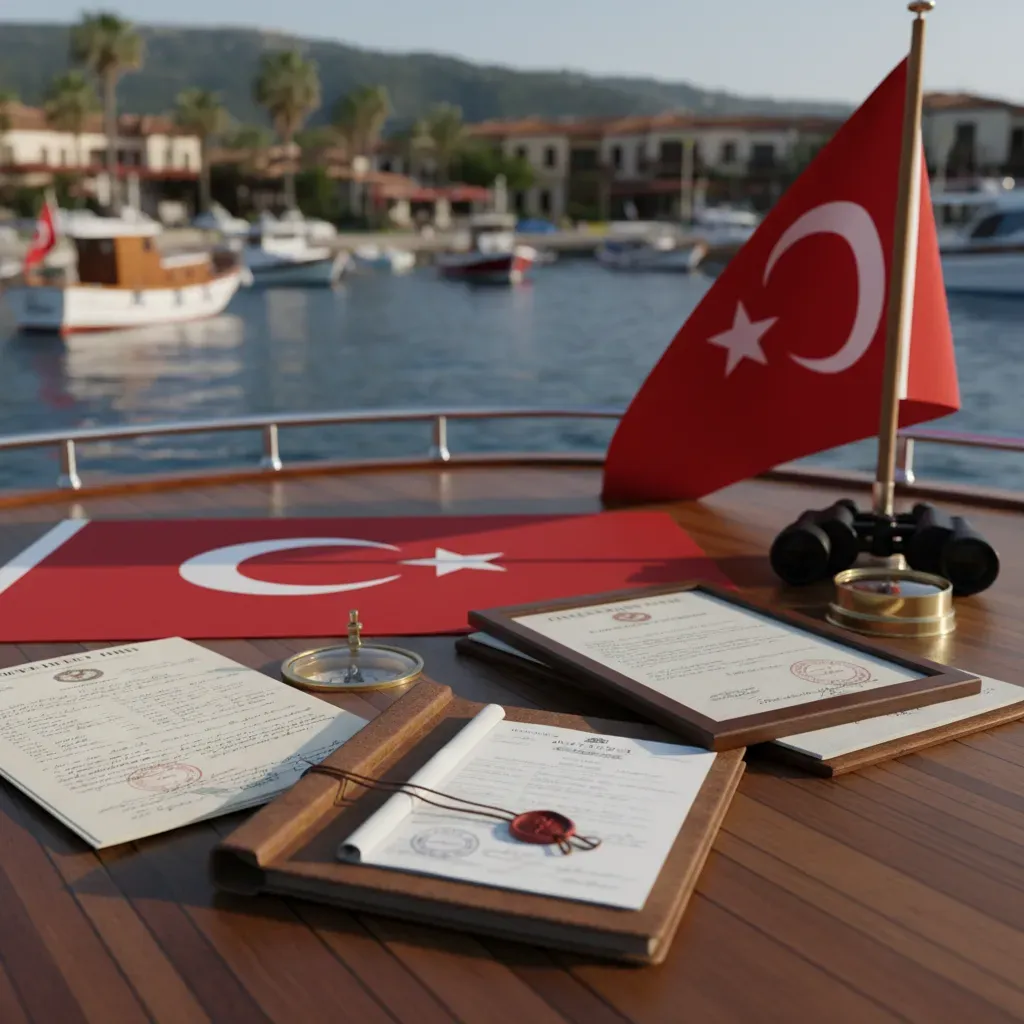
To operate a yacht charter in Turkey, you need TURSAB (Association of Turkish Travel Agencies) membership or must work through a TURSAB-member agency. Yacht owners who want to charter directly need an A-group travel agency licence, or they partner with an existing agency. Your management firm should either hold this capability or connect you with the right agency. If they gloss over this requirement, that is a problem.
Customs and temporary importation
Foreign-flagged yachts enter Turkey on a temporary importation permit (transit log). This document has a validity period, and exceeding it carries heavy penalties, including potential seizure of the yacht. Your management company must track these dates and initiate extensions when needed. There is no room for error here.
Regional comparison: where to base your yacht
Turkey’s yachting infrastructure clusters in a few key regions. Each one has a different personality.
| Region | Strengths | Weaknesses | Best for |
|---|---|---|---|
| Bodrum | Strong shipyard infrastructure, gulet building tradition, large marina capacity, active charter market | Overcrowded in peak summer, marina prices rising | Charter yachts, gulets, refit projects |
| Gocek | Calm and sheltered bays, high-end charter demand, quality marinas (D-Marin, Club Marina) | Limited shipyard capacity, small town | Private-use yachts, luxury charter |
| Marmaris | Strong shipyard district (Netsel, Marmaris Yacht Marine), affordable labour, wide spare parts network | Marinas can feel dated, town centre crowded | Maintenance-focused management, winter storage |
| Antalya | Modern marinas, growing charter market, strong airport connections | Shipyard infrastructure not as deep as other regions | Motor yachts, eastern Med route planning |
| Istanbul | Close to business centres, large shipyards (Tuzla), international connectivity | Bosphorus traffic, logistics challenges, weather variability | Mega yachts, commercial fleets, major shipyard work |
Your firm’s main office or strongest network should be in the region where your yacht actually spends most of its time. Hiring an Istanbul-based company for a yacht berthed in Bodrum means someone has to catch a flight every time something goes wrong. That adds cost and delays response times.
Local firm vs international firm
This question comes up a lot. Both options have real advantages.
Local Turkish firms
They know the legal framework, the local business culture, and the shipyard network from the inside. Harbour Master procedures, customs, TURSAB processes: they have done it hundreds of times. Labour and subcontractor coordination tends to be faster and cheaper because of established local relationships.
The downside: some local firms lack international-standard reporting and digital management infrastructure. English communication quality is not uniform across all firms.
International firms with Turkey offices
ISM certification, international reporting standards, and multilingual teams are usually their strong points. For foreign-flagged yachts and international owners, there is a familiarity advantage.
The downside: they may not have the same depth of local regulatory knowledge as a Turkish firm. Management fees are generally higher. If the Turkey office is small, decisions may depend on a head office abroad, which slows things down.
In practice, the best results tend to follow a simple pattern: foreign-flagged yachts above 45 metres often do well with international firms, while Turkish-flagged yachts cruising the Aegean and Mediterranean usually get better value from local firms. But there are always exceptions. Choose based on references and demonstrated capability, not on whether the company name sounds local or international.
Cost analysis
Yacht management in Turkey costs noticeably less than Western Europe. But “cheap” is not the right word, because quality service has a price here too. These are approximate figures for 2025-2026.
Management fees
| Yacht size | Annual management fee (EUR) | Notes |
|---|---|---|
| 15-24m | 15,000 - 35,000 | Usually a fixed fee |
| 24-35m | 35,000 - 80,000 | Fixed or percentage-based |
| 35-50m | 80,000 - 160,000 | Percentage model common |
| 50m+ | 160,000 - 300,000+ | Full-service, dedicated team |
How Turkey compares to Western Europe
Management fees in France or Italy for the same yacht size typically run 40% to 60% higher. The labour cost gap is even wider: a painter’s daily rate in Turkey is roughly one-third of what you would pay in the western Med. Shipyard rates follow a similar pattern.
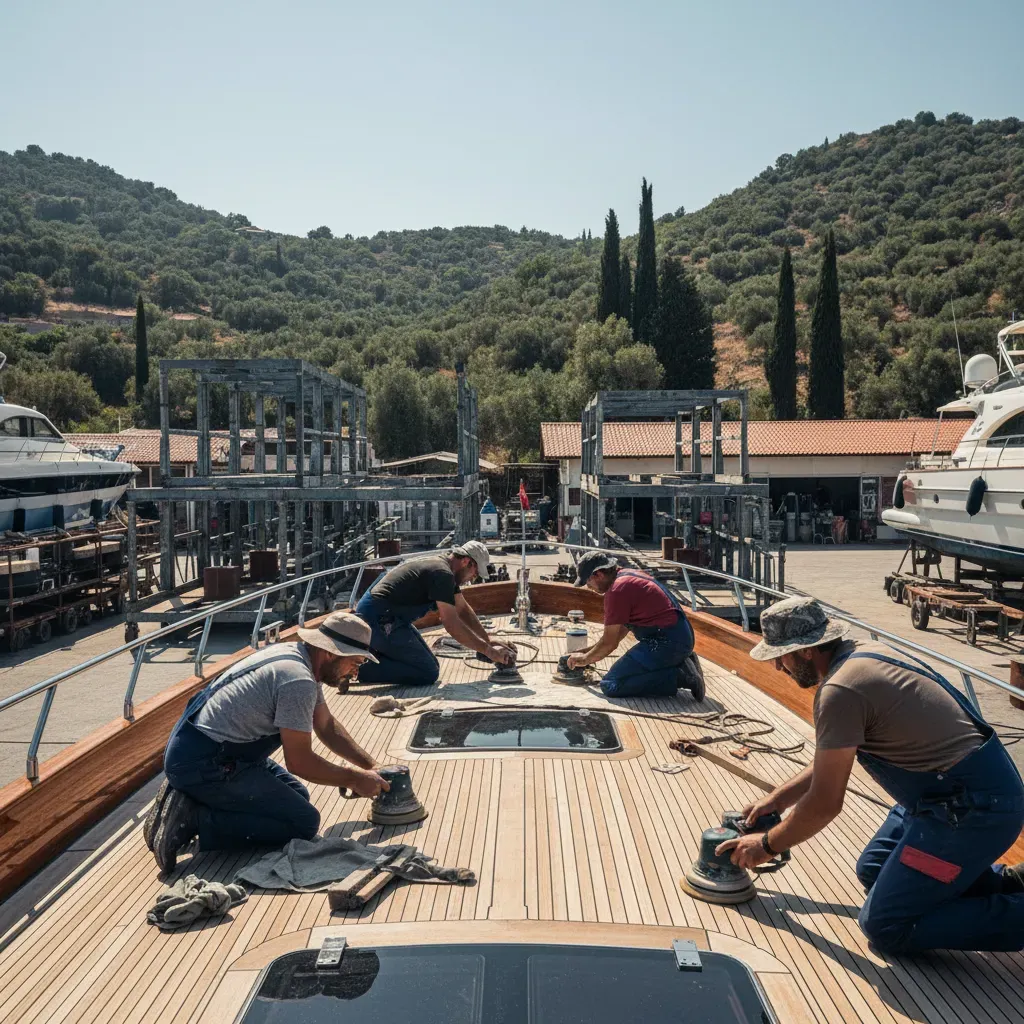
This cost advantage becomes most visible during refits. The same scope of work that costs EUR 500,000 in Palma de Mallorca or La Ciotat might come in at EUR 250,000 to EUR 350,000 in Bodrum or Marmaris. Quality at the top-tier Turkish yards is competitive with their European counterparts. Several yards have built or refitted yachts that regularly appear at the Monaco Yacht Show.
A word of caution though. Not every low quote is a good deal. Some firms cut corners by using lower-quality subcontractors. Reference checks matter everywhere, but in Turkey they matter more than average because the quality range between firms is wider.
Additional costs to budget for
Beyond the management fee: marina berthing (EUR 15,000 to EUR 80,000 per year depending on marina and yacht size), insurance (EUR 8,000 to EUR 40,000), fuel, crew salaries, and maintenance. Total annual operating costs generally land between 6% and 10% of the yacht’s value.
For a broader breakdown of yacht management costs, see our Yacht Management: Complete Guide.
How to evaluate a firm in Turkey
The general criteria from our How to Choose a Yacht Management Company guide all apply. But Turkey adds a few extra layers.
Start with regulatory knowledge. Ask the firm to walk you through the Cabotage Law implications for your specific situation. Ask about transit log tracking. Ask about TURSAB. If the answers feel vague or overly optimistic (“do not worry, we handle everything”), keep looking. You want specifics.
Then look at their shipyard relationships. Ask which yards they work with. A good firm has reliable relationships at two or three different yards. A firm that depends on a single yard will leave you waiting when that yard is booked.
Talk to current clients. In Turkey, there can be some reluctance around this, but any serious firm should connect you with at least two owners. Do not just ask whether they are satisfied. Ask how quickly problems got solved and whether the financial reporting was clear.
If you are a foreign owner, test the firm’s English communication. Not just during the sales pitch, but in the kind of back-and-forth that happens during daily operations. Written reports should be professional and regular.
Finally, check their digital systems. Firms that use a proper management platform for maintenance tracking, document management, and financial reporting will serve you better than those running on phone calls and WhatsApp. This matters less for a 20-metre yacht and a lot more above 30 metres.
For a comparison of digital management tools, see our Yacht Management Software guide.
Turkey-specific issues to watch
Beyond the standard evaluation, a few things are particularly important in Turkey.
Currency risk is the first. Management fees are usually quoted in EUR or USD, but many local expenses are paid in Turkish lira. Currency fluctuations can move costs significantly in either direction. Make sure your contract specifies how exchange rate changes are handled.
Seasonal pressure is another. The Aegean and Mediterranean peak season runs from May through October. During this window, getting a shipyard slot, finding spare parts, or hiring crew becomes harder and more expensive. A well-organised firm plans major maintenance for the off-season (November through March) and minimises surprises during charter months.
Crew availability is not always straightforward either, especially STCW-certified, English-speaking personnel. Your management firm’s crew network matters. Some firms run in-house training programmes, which is a positive sign.
And think about winter storage early. Where and how the yacht is stored off-season affects the annual budget. Marmaris and Bodrum shipyards are popular for winter haul-out and maintenance. Your management firm should be able to plan the full layup cycle: haul-out, winterisation, maintenance scheduling, and spring re-launch.
FAQ
How much does yacht management cost in Turkey?
For yachts between 15 and 24 metres, annual management fees range from EUR 15,000 to EUR 35,000. For 35 to 50-metre yachts, expect EUR 80,000 to EUR 160,000. These are management fees only. Crew, maintenance, fuel, marina, and insurance are separate. Total annual operating costs typically fall between 6% and 10% of the yacht’s value, which is lower than the 8% to 12% common in Western Europe.
Can I have my foreign-flagged yacht managed in Turkey?
Yes. Foreign-flagged yachts can stay in Turkey on a temporary importation permit (transit log) and receive professional management services. Commercial chartering in Turkish waters requires either switching to the Turkish flag or obtaining special permits. Your management firm should be able to explain the options for your specific flag state and usage pattern.
How does the Cabotage Law affect yacht management?
The Cabotage Law reserves commercial maritime activity in Turkish waters for Turkish-flagged vessels. Private cruising on a foreign-flagged yacht is generally permitted, but commercial charter activity is restricted. Your management company should clearly explain what you can and cannot do based on your flag and intended use.
Which region in Turkey is best for yacht management?
It depends on your needs. For refit work and a deep shipyard network, Bodrum and Marmaris are strongest. For calm cruising grounds and high-end charter, Gocek is hard to beat. For eastern Mediterranean routing, Antalya works well. For large-scale shipyard projects, Istanbul’s Tuzla district has the capacity. Base your decision on where the yacht will actually spend most of its time.
What licences are required for yacht management in Turkey?
The management firm needs to be registered as a maritime company. If charter operations are involved, TURSAB membership or a working arrangement with a TURSAB-member agency is required. ISM certification is necessary for yachts above 500 GT or those operating commercially. Beyond that, there are regular reporting obligations to the Harbour Master and flag state compliance requirements.