Yacht price guide 2026: current market values & trends
The yacht market in 2026 looks different from two years ago. The post-pandemic buying frenzy that drove prices up 20% to 40% across most segments has cooled. Inventory is rising, new-build delivery slots are opening up after years of backlogs, and secondhand prices in the 30-to-60-foot range have softened 10% to 15% from their 2023 peaks. The superyacht segment above 40 metres remains tight, with demand still outpacing supply for the best builders.
This guide covers current market prices by size and type, how much yachts have depreciated from recent highs, and when timing the market actually works. For the full cost picture beyond the purchase price, see the Yacht Prices & Ownership Costs Guide.
Contents
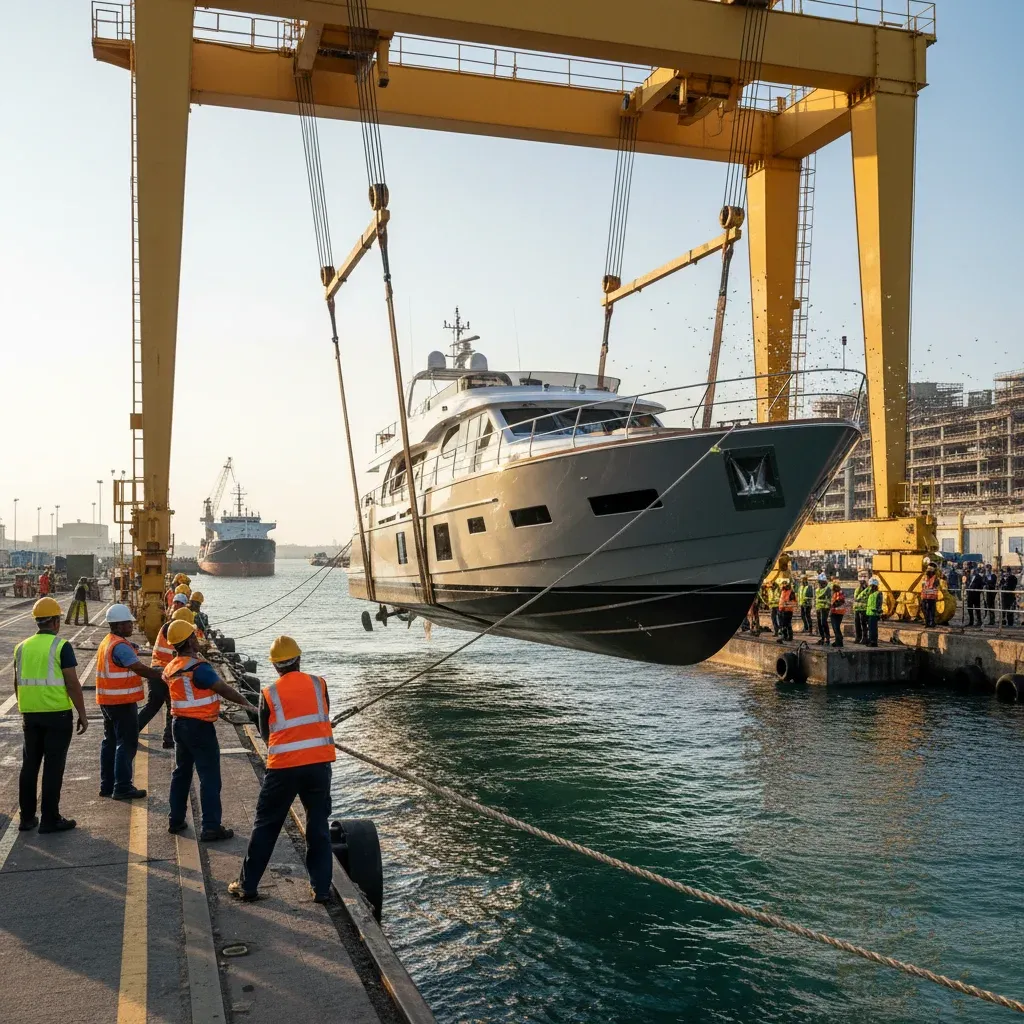
- New-build prices by size and type
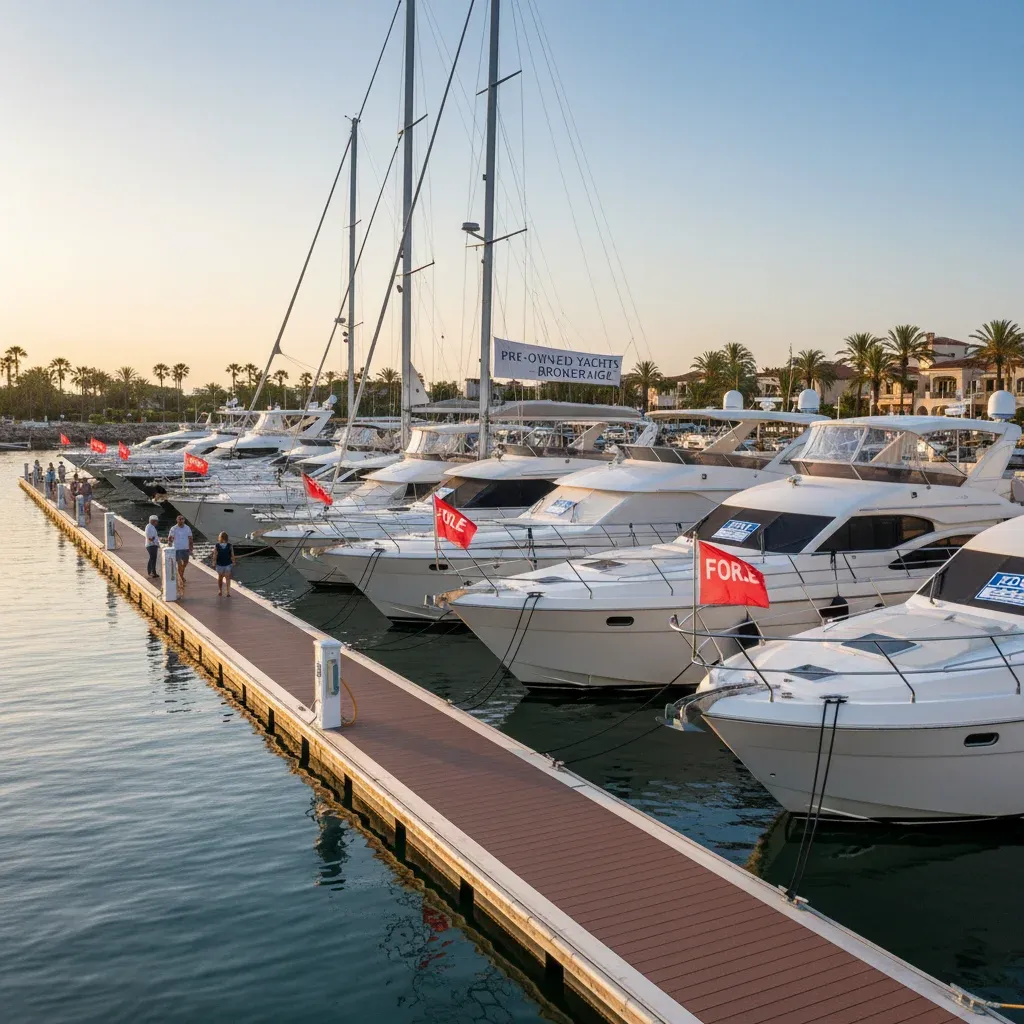
- Secondhand market: what used yachts cost in 2026
- Price comparison by builder
- How yacht prices have moved since 2022
- Depreciation: what to expect year by year
- New-build lead times in 2026
- When to buy: timing the yacht market
- FAQ
New-build prices by size and type
New-build prices depend on the builder, specifications, and propulsion type. The table below gives current 2026 price ranges for production and semi-custom yachts from established European builders.
| Size Range | Sailing Yacht (new) | Motor Yacht (new) | Catamaran (new) |
|---|---|---|---|
| 30–35 ft (9–11m) | €120,000–€220,000 | €150,000–€350,000 | €250,000–€450,000 |
| 35–42 ft (11–13m) | €200,000–€400,000 | €300,000–€650,000 | €400,000–€800,000 |
| 42–50 ft (13–15m) | €350,000–€700,000 | €500,000–€1,200,000 | €700,000–€1,500,000 |
| 50–60 ft (15–18m) | €600,000–€1,500,000 | €1,000,000–€3,000,000 | €1,200,000–€3,000,000 |
| 60–80 ft (18–24m) | €1,500,000–€4,000,000 | €3,000,000–€10,000,000 | Custom pricing |
| 80–100 ft (24–30m) | Semi-custom/custom | €8,000,000–€25,000,000 | Custom pricing |
| 100 ft+ (30m+) | Custom only | €20,000,000–€100,000,000+ | N/A |
Prices reflect base specifications. Options, customisation, and VAT can add 15% to 30%.
At the entry level, builders like Beneteau and Jeanneau offer production sailing yachts and motor yachts at competitive prices because they manufacture hundreds of hulls per year. At the 50-foot mark, semi-custom builders such as Sunseeker, Princess Yachts, and Azimut start offering more personalisation at a higher price point. Above 80 feet, nearly everything is semi-custom or full custom, and pricing becomes project-specific.
Catamarans have gained market share steadily since 2020, and their prices reflect it. A new Lagoon or Fountaine Pajot catamaran in the 42-to-50-foot range costs roughly the same as a motor yacht of equal length, driven by demand from the charter market and liveaboard cruisers.
Secondhand market: what used yachts cost in 2026
The secondhand market offers the widest price variation because condition, equipment, and maintenance history matter as much as age and brand. The ranges below assume a well-maintained yacht in good survey condition.
| Age | 35 ft Sailing | 45 ft Motor | 60 ft Motor | 80 ft Superyacht |
|---|---|---|---|---|
| 1–3 years | €150,000–€280,000 | €400,000–€900,000 | €1,500,000–€3,500,000 | €6,000,000–€15,000,000 |
| 4–7 years | €100,000–€200,000 | €250,000–€600,000 | €900,000–€2,200,000 | €4,000,000–€10,000,000 |
| 8–12 years | €60,000–€130,000 | €150,000–€400,000 | €600,000–€1,500,000 | €2,500,000–€7,000,000 |
| 13–20 years | €35,000–€80,000 | €80,000–€250,000 | €350,000–€900,000 | €1,500,000–€4,500,000 |
| 20+ years | €15,000–€50,000 | €40,000–€150,000 | €200,000–€600,000 | €800,000–€3,000,000 |
Prices assume European market (Mediterranean / Northern Europe). North American prices may differ by 10–20%.
The secondhand market in early 2026 favours buyers in the sub-60-foot segment. MYBA’s 2025 brokerage report recorded a 22% increase in listings between 30 and 50 feet compared to 2024, with average time on the market stretching from 4 months to 7 months. Sellers who listed at peak 2023 prices are increasingly accepting offers 10% to 20% below asking.
Above 60 feet, the picture is more mixed. Well-maintained superyachts from top builders (Feadship, Lurssen, Amels, Heesen) hold their value better than production-built equivalents, and the best examples still sell within weeks of listing. At Fort Lauderdale Boat Show 2025, brokerage houses reported that the 70-to-90-foot motor yacht segment was the most active for secondhand transactions.
For a first-time buyer’s perspective on entering the market at lower price points, see Small Yacht Ownership Guide.
Price comparison by builder
Builder reputation has a measurable effect on both purchase price and resale value. The table below compares new-build starting prices for a 50-foot motor yacht across market segments.
| Segment | Representative Builders | Starting Price (50 ft) | Resale at 10 Years |
|---|---|---|---|
| Volume production | Beneteau (Antares), Jeanneau (Merry Fisher) | €350,000–€500,000 | 40–50% of new |
| Premium production | Sunseeker (Manhattan), Princess (F50) | €800,000–€1,200,000 | 50–60% of new |
| Semi-custom | Azimut (Magellano), Riviera (SUV) | €1,000,000–€1,800,000 | 55–65% of new |
| Custom | Baltic Yachts, Oyster, CNB | €1,500,000–€3,000,000+ | 60–70% of new |
Premium and semi-custom builders command higher prices partly because of build quality and partly because of brand cachet. An Azimut Magellano or a Sunseeker Manhattan at 50 feet holds its value better on the brokerage market than a volume-production equivalent, which partly offsets the higher purchase price. Custom builders like Oyster (sailing) and Baltic Yachts hold the strongest residual values of all, because each hull is built to owner specification and production numbers are limited.
The Azimut-Benetti Group, the world’s largest yacht builder by volume, reported 2025 revenue of over €1.2 billion, with the strongest demand in the 50-to-80-foot range. Sunseeker, owned by the Dalian Wanda Group, delivered over 150 yachts in 2025, with the Predator and Manhattan lines accounting for the bulk of sales.
How yacht prices have moved since 2022
The yacht market went through a cycle between 2020 and 2026 that compressed what would normally take a decade into four years.
| Year | Market Condition | Price Trend | Key Driver |
|---|---|---|---|
| 2020–2021 | Surge in demand | +15% to +25% | Pandemic flight to private assets, outdoor recreation |
| 2022 | Peak demand, low inventory | +25% to +40% above 2019 levels | Secondhand inventory at historic lows, new-build slots sold out 2–3 years ahead |
| 2023 | Plateau | Flat to +5% | Interest rate rises cool financing, top-end still strong |
| 2024 | Correction begins | −5% to −10% (sub-60 ft) | Inventory rising, sellers adjusting expectations |
| 2025 | Buyer’s market (sub-60 ft) | −10% to −15% from peak | More listings, longer sell times, new-build slots available |
| 2026 (current) | Stabilising | Flat to −5% | Market finding equilibrium; superyacht segment still firm |
The Superyacht Group’s “State of Yachting 2025” report confirmed that the number of yachts for sale in the 15-to-30-metre range grew 28% year-over-year, while the segment above 40 metres saw only a 6% increase in listings.
For buyers, this means 2026 is a reasonable time to buy in the sub-60-foot range. Prices are well below the 2022–2023 peaks, financing rates are stabilising, and negotiating room has returned. For sellers of smaller yachts, holding through 2026 may be wise — historical cycles suggest prices flatten before recovering, and selling into a rising market is less painful.
Depreciation: what to expect year by year
Depreciation is the largest hidden cost of yacht ownership, and it varies significantly by segment.
| Years Owned | Production Motor (sub-50 ft) | Premium Motor (50–80 ft) | Custom Superyacht (80 ft+) |
|---|---|---|---|
| Year 1 | −12% to −18% | −8% to −12% | −5% to −8% |
| Year 3 | −25% to −35% | −18% to −25% | −12% to −18% |
| Year 5 | −35% to −45% | −25% to −35% | −18% to −25% |
| Year 10 | −50% to −60% | −40% to −50% | −30% to −40% |
| Year 15 | −60% to −70% | −50% to −60% | −40% to −55% |
| Year 20 | −70% to −80% | −60% to −70% | −50% to −65% |
Depreciation accelerates in the first three years and then gradually flattens. This is why buying a three-to-five-year-old yacht from a reputable builder is often the best financial decision: the steepest drop has already happened, and the yacht still has years of reliable service ahead.
Custom superyachts depreciate more slowly because they are scarce, often one-of-a-kind, and built to higher specifications. A well-maintained Feadship or Lurssen at 15 years old retains significantly more of its value than a production motor yacht of the same age.
Condition is the wild card. A neglected yacht depreciates faster than these averages; a yacht with a perfect maintenance log, recent refit, and current surveys can beat them.
New-build lead times in 2026
The multi-year backlogs that characterised 2021–2023 have largely cleared. Delivery timelines for new orders in early 2026:
| Builder Segment | Current Lead Time | 2022 Peak Lead Time |
|---|---|---|
| Volume production (Beneteau, Jeanneau) | 4–8 months | 12–18 months |
| Premium production (Sunseeker, Princess) | 8–14 months | 18–30 months |
| Semi-custom (Azimut, Sanlorenzo) | 12–20 months | 24–36 months |
| Full custom (Feadship, Lurssen, Oceanco) | 30–48 months | 36–60 months |
The return of shorter lead times changes the buying calculus. During the peak, many buyers purchased secondhand at inflated prices because they could not wait two to three years for a new build. That pressure has eased. Buyers who previously accepted whatever was available now have the option of ordering to their own specification, which has contributed to softening secondhand prices.
Boat International’s Global Order Book 2026 recorded 1,044 superyachts (above 24 metres) under construction or on order worldwide, down from the 2023 peak of 1,117 but still well above the pre-pandemic average of 850.
When to buy: timing the yacht market
Timing matters, but not as much as buying the right boat in the right condition. A few principles hold across market cycles.
Buy secondhand during a correction. The current market (early to mid-2026) is favourable for buyers in the sub-60-foot segment. Inventory is high, sellers are motivated, and asking prices are negotiable. This window will narrow as inventory gets absorbed.
Buy new when lead times are short. Short lead times mean builders are competing for orders. This is when you get the best spec-for-price deals and the most flexibility on options and delivery dates. Early 2026 fits this description for most production and semi-custom builders.
Avoid buying at boat shows unless you have done your research. Show deals are real (builders offer 3% to 7% discounts to book orders at major shows like the Cannes Yachting Festival or Fort Lauderdale International Boat Show), but the pressure to decide quickly leads to specification mistakes. Know what you want before you go.
Seasonal pricing exists. In the Mediterranean market, listing prices tend to be highest in April and May (before charter season) and lowest in October and November (when owners who did not charter want to sell before winter). The difference can be 5% to 10% on the same yacht.
Do not try to bottom-tick the market. Waiting for the absolute lowest price means watching good boats sell to other buyers. If a yacht meets your requirements at a price you can afford, and the survey is clean, that is enough. The difference between buying at -12% and -15% from peak is much smaller than the cost of a wasted season.
For the ongoing costs after purchase, see Yacht Running Costs.
FAQ
How much does a yacht cost in 2026?
New yacht prices range from €120,000 for a basic 30-foot sailing yacht to over €100 million for a custom superyacht above 100 feet. The most active market segment, 35 to 50 feet, sits between €200,000 and €1.2 million for a new production or semi-custom motor yacht. Secondhand prices are 25% to 60% lower depending on age.
Are yacht prices going down in 2026?
In the sub-60-foot segment, yes. Prices have dropped 10% to 15% from the 2022–2023 peak, driven by increased inventory and reduced buyer urgency. Above 60 feet, prices are more stable, and demand for the best custom builders (Feadship, Lurssen) remains firm.
Is 2026 a good time to buy a yacht?
For buyers looking at production and semi-custom yachts under 60 feet, 2026 offers better value than any year since 2020. Secondhand inventory is up, asking prices are negotiable, and new-build lead times have shortened. For superyacht buyers above 40 metres, the market is tighter and less favourable.
How fast do yachts depreciate?
A production motor yacht under 50 feet typically loses 25% to 35% of its value in the first three years. Depreciation slows after that. Premium builders hold value better: a Sunseeker or Azimut at 10 years retains 50% to 60% of its new price, compared to 40% to 50% for a volume builder.
What is the cheapest yacht you can buy?
Seaworthy used sailing yachts in the 25-to-30-foot range can be found for €15,000 to €40,000 on the secondhand market. At this price, expect a boat that is 15 to 25 years old and needs some work. The cheapest new yacht worth considering is a production daysailer or weekender starting around €80,000 to €120,000.
How long is the wait for a new yacht in 2026?
Volume builders like Beneteau and Jeanneau are delivering in 4 to 8 months. Premium builders like Sunseeker and Princess take 8 to 14 months. Full custom superyachts from Feadship or Lurssen still require 30 to 48 months. All of these are significantly shorter than the 2022 peak.
Do custom yachts hold their value better?
Custom yachts from established builders depreciate 30% to 40% over 10 years, compared to 50% to 60% for production yachts. The lower depreciation reflects limited supply, higher build quality, and stronger brand recognition on the brokerage market. A well-maintained custom yacht is the closest thing to a store of value in yachting, though none should be considered an investment.