Small yacht ownership: a first-timer’s complete guide
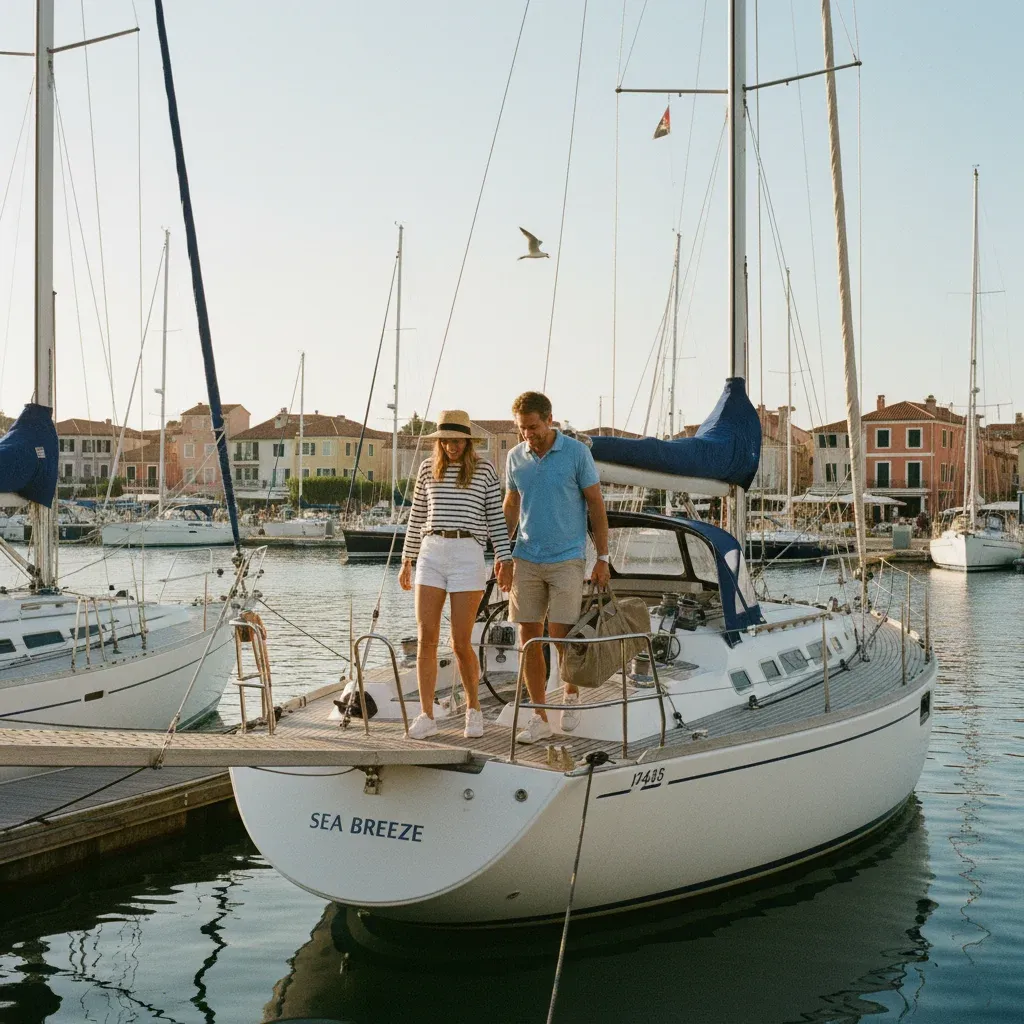
Most yacht ownership content is written for people buying 60-metre superyachts. That is not most buyers. The majority of first-time yacht owners are looking at boats between 25 and 45 feet, motor or sail, often secondhand, usually kept in a local marina. The costs are real but manageable with planning, and the learning curve is steeper than most brokers let on.
This guide covers how to pick the right boat for your first purchase, what ownership actually costs at the entry level, and the mistakes that catch new owners off guard. For the full cost picture across all yacht sizes, see our Yacht Prices & Ownership Costs Guide.
Contents
- Choosing your first yacht: motor vs sail
- Size matters: the 25-to-45-foot range
- New vs secondhand
- What small yacht ownership actually costs
- The first-time buyer checklist
- Fractional and co-ownership options
- Mistakes new owners make
- Your first season: what to expect
- FAQ
Choosing your first yacht: motor vs sail
The motor-versus-sail decision is less about romance and more about how you plan to use the boat. Each type has a different cost profile, maintenance schedule, and learning requirement.
| Factor | Sailing Yacht (30–40 ft) | Motor Yacht (30–40 ft) |
|---|---|---|
| Purchase price (secondhand) | €40,000–€150,000 | €60,000–€200,000 |
| Fuel costs per season | €500–€2,000 | €3,000–€12,000 |
| Marina fees | Similar | Similar (slightly higher for wider beam) |
| Maintenance | Rigging, sails, hull, engine | Engines (usually twin), hull, electronics |
| Speed | 5–8 knots cruising | 15–25 knots cruising |
| Learning curve | Steeper (sailing skills + navigation) | Moderate (boat handling + navigation) |
| Crew needed | Can single-hand, easier with 2 | Solo-friendly |
Sailing yachts from builders like Beneteau, Jeanneau, and Bavaria Yachts dominate the secondhand market in the 30-to-40-foot range. Their GRP construction is durable, parts are widely available, and hundreds of units were built in each model year, which keeps used prices reasonable.
Motor yachts in this range cost more to buy and to run, but they cover ground faster and require less skill to operate. For buyers who plan short weekend trips and want to reach anchorages quickly, a motor yacht is usually the better fit. For those interested in extended cruising and lower running costs, sail makes more financial sense.
The Royal Yachting Association (RYA) recommends that first-time buyers take a practical boating course before committing to a purchase. The RYA Day Skipper qualification, which takes about a week, covers the basics of navigation, safety, and boat handling for both sail and power.
Size matters: the 25-to-45-foot range
Bigger is not always better, especially for a first boat. Every extra foot adds to marina fees, insurance, maintenance, and haul-out costs. The sweet spot for most first-time owners falls between 30 and 38 feet.
25–30 feet is the minimum for overnight cruising with any comfort. A couple can live aboard for a weekend, but storage and headroom are limited. These boats are trailable in some cases, which eliminates marina fees entirely. Annual running costs sit between €5,000 and €12,000.
30–38 feet is where most first-time buyers land. Two cabins, a proper galley, standing headroom, and enough range for coastal passages. Boats in this size are small enough to single-hand but large enough to take guests. Running costs range from €10,000 to €25,000 per year, depending on location and use.
38–45 feet is a step up in comfort and cost. Three-cabin layouts are common, and the boat can handle offshore passages. But marina fees jump noticeably above 40 feet (many marinas price by the metre), and the yacht becomes harder to manage without crew or an experienced partner. Annual costs climb to €20,000–€40,000.
New vs secondhand
The secondhand market offers the best value for first-time buyers. A five-year-old yacht from a major production builder like Beneteau, Jeanneau, or Bavaria Yachts will have lost 25% to 40% of its new price but remain in good condition if maintained. A ten-year-old yacht can cost half its original price.
| Criteria | New Yacht | Secondhand (3–7 years) | Secondhand (8–15 years) |
|---|---|---|---|
| Price (33 ft sailing) | €140,000–€200,000 | €90,000–€140,000 | €50,000–€90,000 |
| Warranty | Full manufacturer warranty | Limited or none | None |
| Customisation | Full spec choices | Take what is available | Take what is available |
| Immediate costs | Minimal | Minor upgrades | Survey-dependent repairs |
| Depreciation (first 3 years) | 20–30% | 10–15% | 5–10% |
| Equipment age | New | Working but aging | May need replacement |
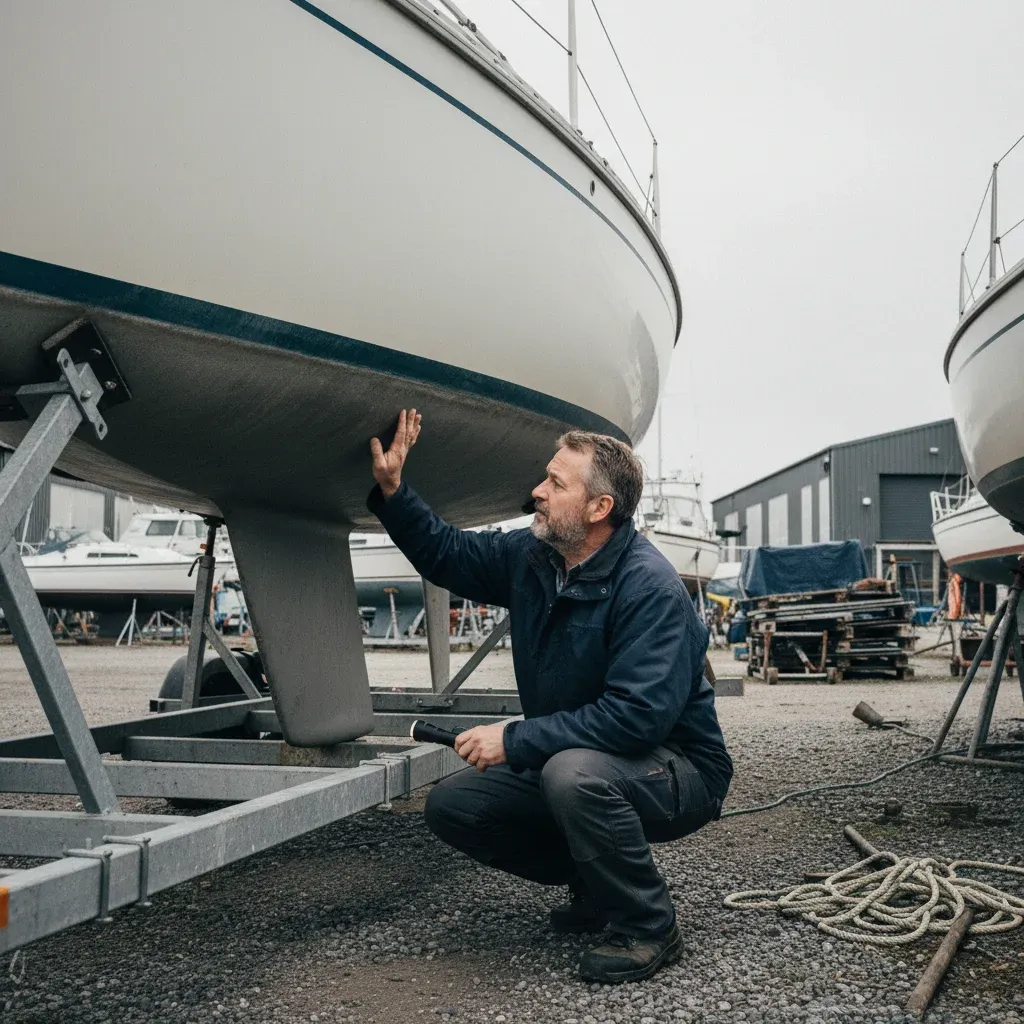
Buying secondhand requires a professional marine survey. A pre-purchase survey costs between €500 and €1,500 depending on the yacht’s size and location, and it will identify structural issues, osmosis, engine condition, rigging wear, and electrical problems. Never skip the survey, no matter how good the boat looks. The Recreational Craft Directive (RCD) requires that all boats sold within the EU meet minimum construction and safety standards, but a survey goes much further.
For new buyers on a budget, a 10-to-15-year-old production yacht from a reputable builder is often the smartest entry point. The depreciation curve has flattened, and any early-life defects have already been found and fixed by previous owners.
What small yacht ownership actually costs
The purchase price is only the beginning. Annual running costs for a small yacht are roughly 8% to 12% of the boat’s value, though this varies widely by location and usage.
| Expense | 30 ft sailing yacht | 35 ft motor yacht | 40 ft sailing yacht |
|---|---|---|---|
| Marina berth | €3,000–€8,000 | €4,000–€10,000 | €6,000–€15,000 |
| Insurance | €1,000–€3,000 | €1,500–€4,000 | €2,500–€6,000 |
| Maintenance & repairs | €2,000–€6,000 | €3,000–€8,000 | €4,000–€10,000 |
| Fuel | €500–€2,000 | €3,000–€10,000 | €800–€2,500 |
| Haul-out & antifouling | €800–€1,500 | €1,000–€2,000 | €1,200–€2,500 |
| Equipment replacement | €500–€2,000 | €1,000–€3,000 | €1,000–€3,000 |
| Administration (registration, fees) | €200–€500 | €200–€500 | €300–€600 |
| Total annual | €8,000–€23,000 | €13,700–€37,500 | €15,800–€39,600 |
Marina fees are the largest fixed cost and vary enormously by region. A berth in Croatia or Turkey costs a fraction of what the same space costs in the south of France or Palma de Mallorca. British Marine’s 2024 survey found that marina costs were the primary concern for 62% of boat owners in the UK.
Insurance for small yachts is straightforward. A 30-foot yacht valued at €80,000 pays roughly €1,200 to €2,400 per year for hull and third-party cover. Our Yacht Insurance Guide covers the details.
For a full breakdown of running costs across all yacht sizes, see Yacht Running Costs.
The first-time buyer checklist
Before signing anything, work through this list:
Define your use case. Weekend day trips? Coastal cruising for two weeks in summer? Living aboard? The answer determines size, type, and budget.
Set a total budget, not just a purchase budget. Include the first year of running costs, any immediate upgrades (safety equipment, electronics, sails), and a contingency of 10% to 15%.
Take a course. The RYA Day Skipper or International Certificate of Competence (ICC) gives you the skills and, in many Mediterranean countries, the legal requirement to operate a yacht.
Commission a marine survey. Non-negotiable for secondhand boats. The surveyor’s report gives you a repair list and a realistic picture of the boat’s condition.
Check the engine hours. Diesel engines on yachts last 5,000 to 8,000 hours before major overhaul. An engine with 4,500 hours is approaching a €10,000-plus rebuild bill.
Inspect the rig (sailing yachts). Standing rigging should be replaced every 10 to 15 years. A full re-rig on a 35-foot yacht costs €5,000 to €12,000.
Secure a marina berth before buying. In popular areas, berth waiting lists can run for years. Confirm availability and cost before you commit to a purchase.
Arrange insurance. Most marina contracts require proof of third-party liability insurance. Arrange cover before the boat moves to its berth.
Fractional and co-ownership options
Not everyone needs a yacht 52 weeks a year. Fractional ownership and co-ownership models reduce both the purchase price and running costs.
Co-ownership means two to four people buy and share a single yacht. Each owner holds a legal share (typically through a simple partnership agreement or a limited company) and splits running costs proportionally. A four-way split on a €120,000 yacht means €30,000 per person for the purchase and roughly €5,000 each per year for running costs. The tradeoff is scheduling: peak-season weekends require agreement, and maintenance responsibilities can cause friction if expectations are not aligned.
Fractional ownership programmes are offered by companies that manage a fleet and sell shares (often in eighths or quarters). Owners get a set number of weeks per year, and the management company handles maintenance, insurance, and berth fees. Costs are higher per week of use than outright ownership, but the hassle factor is much lower. These programmes are more common in the 40-foot-plus range.
Yacht clubs and syndicates offer another route. Some sailing clubs operate shared fleets where members pay an annual fee plus hourly or daily rates. This is the lowest-cost way to get regular time on the water without any ownership obligations.
For someone unsure about long-term commitment, co-ownership or a club membership is a sensible way to test the waters before buying outright.
Mistakes new owners make
Most first-year problems are avoidable. Here are the ones that come up repeatedly.
Buying too big. A 45-footer sounds impressive, but if you cannot handle it confidently in a crosswind at the fuel dock, you will dread every trip. Start smaller than you think you need. You can always move up.
Ignoring the engine. New owners focus on the interior and the sails. The engine is less exciting but far more expensive when it fails. Check compression, oil analysis, and hour logs.
Skipping the survey. A €1,000 survey can save €20,000 in hidden repairs. The seller’s assurance that the boat is “in great condition” is not a substitute.
Underestimating marina costs. A 12-metre berth in Antibes costs upward of €25,000 per year. The same berth in Gocek, Turkey is under €5,000. Where you keep the boat matters as much as what you paid for it.
Not budgeting for the first refit. Every secondhand yacht needs something in the first year: new electronics, a replacement life raft, cockpit canvas, or antifouling. Budget €3,000 to €8,000 on top of the purchase price.
Forgetting about depreciation. Boats are not investments. A new yacht loses 20% to 30% of its value in the first three years. Buying secondhand softens this, but all boats depreciate unless they become classics.
Your first season: what to expect
The first season is about learning the boat, not crossing oceans. Plan short trips, stay close to home, and build confidence before attempting longer passages.
Spend time at the dock. Get to know the engine, the electrical system, the plumbing, and where every through-hull fitting is. Read the manuals. This is not glamorous, but it prevents expensive mistakes at sea.
Practice berthing. Docking in tight marinas with wind and current is the single skill that causes the most stress for new owners. Practice in quiet conditions before peak season.
Join a local sailing community. Other boat owners in your marina are the best source of practical advice: which boatyard is honest, where to find cheap antifouling, and which anchorages are sheltered in a northerly.
Keep a log. Record engine hours, fuel consumption, maintenance tasks, and any issues. This log becomes invaluable for insurance claims, resale, and long-term planning. Our Yacht Maintenance & Safety Guide explains how to set up a proper maintenance programme.
Accept that things will break. Something will fail in the first season. A bilge pump, a winch, a head fitting, a navigation light. This is normal. The measure of good ownership is how quickly you fix it, not whether it happens.
FAQ
How much does it cost to own a small yacht per year?
Annual running costs for a yacht between 30 and 40 feet range from €8,000 to €40,000, depending on the type (sail or motor), location, and how often you use it. The largest single expense is usually the marina berth, followed by maintenance and insurance.
Is a sailing yacht or motor yacht better for a first-time owner?
Neither is objectively better. Sailing yachts are cheaper to run, especially on fuel, but require more skill. Motor yachts are easier to operate and faster, but fuel and engine maintenance costs are higher. Choose based on how you want to spend your time on the water.
Should I buy a new or secondhand yacht?
Secondhand is the better value for most first-time buyers. A yacht that is 5 to 10 years old from a production builder like Beneteau or Jeanneau has already absorbed the steepest depreciation and, if surveyed, offers reliable service at a significantly lower cost than new.
Do I need a licence to own a yacht?
Ownership does not require a licence in most countries, but operating one does in many jurisdictions. In the Mediterranean, most countries require an International Certificate of Competence (ICC) or equivalent. The Royal Yachting Association (RYA) in the UK offers recognised qualifications that satisfy ICC requirements.
What is the smallest yacht you can live on?
Comfortable long-term living typically starts around 32 to 35 feet for a couple. Below that, storage and headroom become limiting factors. Some solo sailors live aboard boats as small as 27 feet, but this requires significant compromises on space and amenities.
Is co-ownership a good idea for a first yacht?
Co-ownership works well when expectations are clear. A written agreement covering scheduling, maintenance responsibilities, insurance, and exit terms is necessary. It halves or quarters the cost and lets you learn about ownership before committing to a boat on your own.
How long does a small yacht last?
A well-maintained GRP (fibreglass) yacht can last 30 to 50 years. The hull rarely fails; it is the systems (engines, electronics, rigging, plumbing) that wear out and need periodic replacement. Regular maintenance is the single biggest factor in longevity.