Yacht fleet management: how to manage multiple vessels efficiently
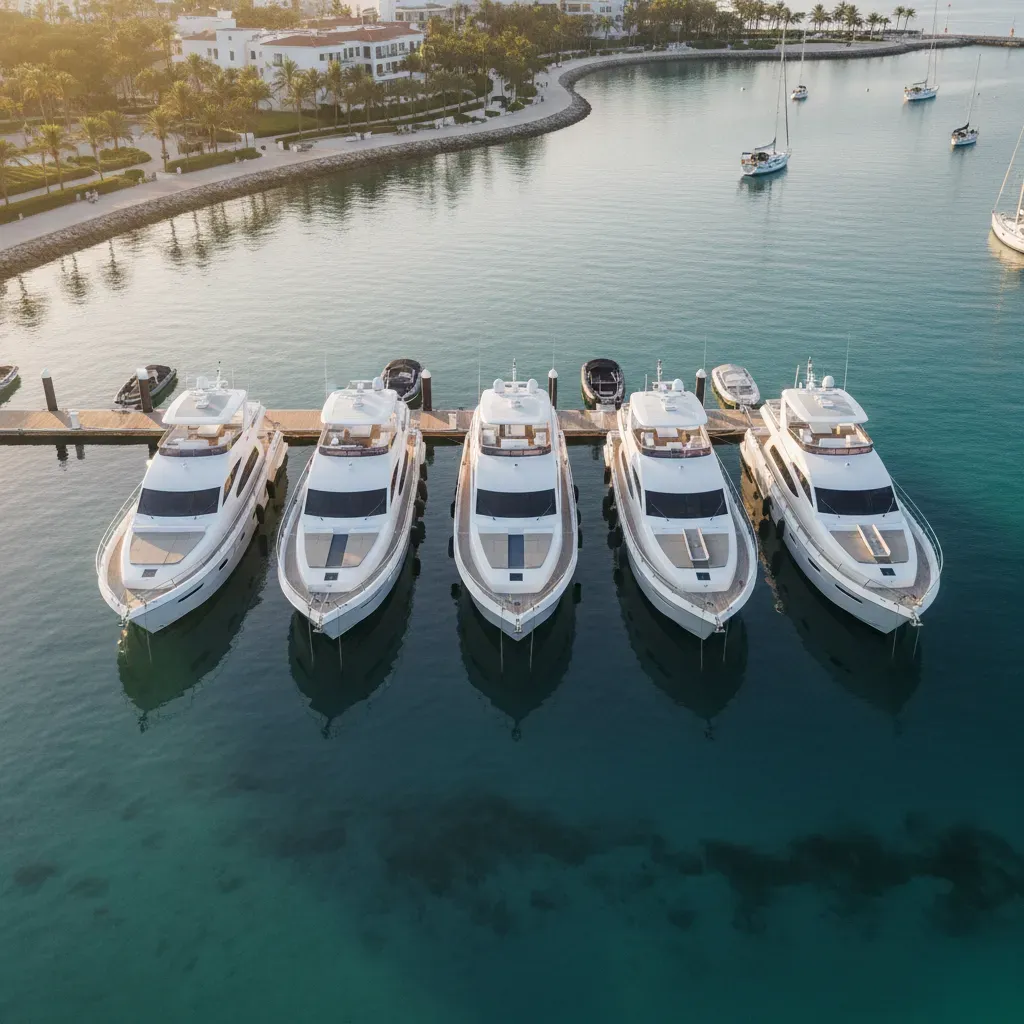
The moment you buy a second yacht, the workload does not double. It triples. Maybe quadruples. Things you used to sort out with a phone call to your captain now require coordination between two captains, two sets of schedules, two maintenance calendars. Add a third boat and you need an entirely different organisational layer. This guide covers what yacht fleet management actually looks like, where it breaks down, and how to build something that scales beyond two or three vessels.
Contents
- Single yacht vs fleet: what changes
- Centralised vs distributed management
- Fleet-wide maintenance coordination
- Crew rotation and sharing
- KPIs: what to measure and why
- Digital tools and the central dashboard
- FAQ
Single yacht vs fleet: what changes
If you already understand the basics of yacht management (if not, our Yacht Management: Complete Guide is a good starting point), grasping what changes with a fleet is easier.
With one yacht, you work directly with your captain. You can keep the maintenance schedule in your head. The budget lives in a single spreadsheet. None of that scales.
| Single yacht | Fleet (3+ vessels) | |
|---|---|---|
| Communication | Captain to owner, direct | Multiple captains to fleet manager to owner(s) |
| Maintenance | One calendar, one yard relationship | Synchronised calendars, multiple yards |
| Crew | Fixed team, rarely changes | Rotation, cross-assignment, reserve pool |
| Budget | Single account, simple tracking | Per-vessel cost centres, consolidated reporting |
| Purchasing | As needed, one at a time | Bulk buying, shared spare parts inventory |
| Compliance | One flag, one set of certificates | Different flags, different requirements, synchronised tracking |
| Risk | Concentrated in one point | Spread out but more complex |
Fleet management is not “the same job for more boats.” It is a different kind of job. People who try to scale their single-yacht approach without changing the underlying structure tend to hit a wall around the third vessel.

Centralised vs distributed management
The first structural decision in yacht fleet management is whether to run operations from a central office or give each vessel autonomy.
Centralised management
One fleet manager (or office) makes all maintenance, crew, finance, and compliance decisions across the fleet. Captains execute on the ground, but strategy comes from the centre.
The strength here is consistency. Maintenance standards, purchasing policies, and reporting formats are uniform across the fleet. You can negotiate bulk deals. A fix that works on one vessel gets rolled out to the others quickly.
The weakness is bottleneck risk. If the centre cannot keep up, decisions slow down. When captains cannot take initiative locally, even a simple spare part order can cost a day.
Centralised management tends to work well for fleets of 2-5 vessels, particularly when the boats operate in the same region.
Distributed management
Each captain (or an assigned manager per vessel) runs their own boat’s day-to-day operations. The centre only steps in for budget approvals, reporting, and big-picture decisions.
You get flexibility. A captain in Antigua can deal with a local yard without waiting for sign-off from an office in Monaco. The downside is that every captain builds their own system. Reporting formats clash. Maintenance standards drift. After a year you have five boats run five different ways, and comparing them becomes guesswork.
This tends to suit fleets of 5+ vessels or operations spread across multiple regions. But it absolutely requires a standardised reporting framework, or it falls apart fast.
In practice: most fleets use a hybrid
The centre sets the standards (maintenance protocols, budget limits, reporting frequency) and the field teams handle daily execution. Some people call this a “federated model” — central policy, local implementation.
Whichever model you choose, the thing that matters most is visibility. If you run things centrally, captains need to understand the reasoning behind your decisions. If you distribute, the person at the centre needs to see every vessel’s status in real time.
Fleet-wide maintenance coordination
A single yacht’s maintenance calendar is already complicated. With a fleet, the complexity multiplies. But a fleet also gives you something a single yacht cannot: the ability to compare.
Synchronised maintenance schedules
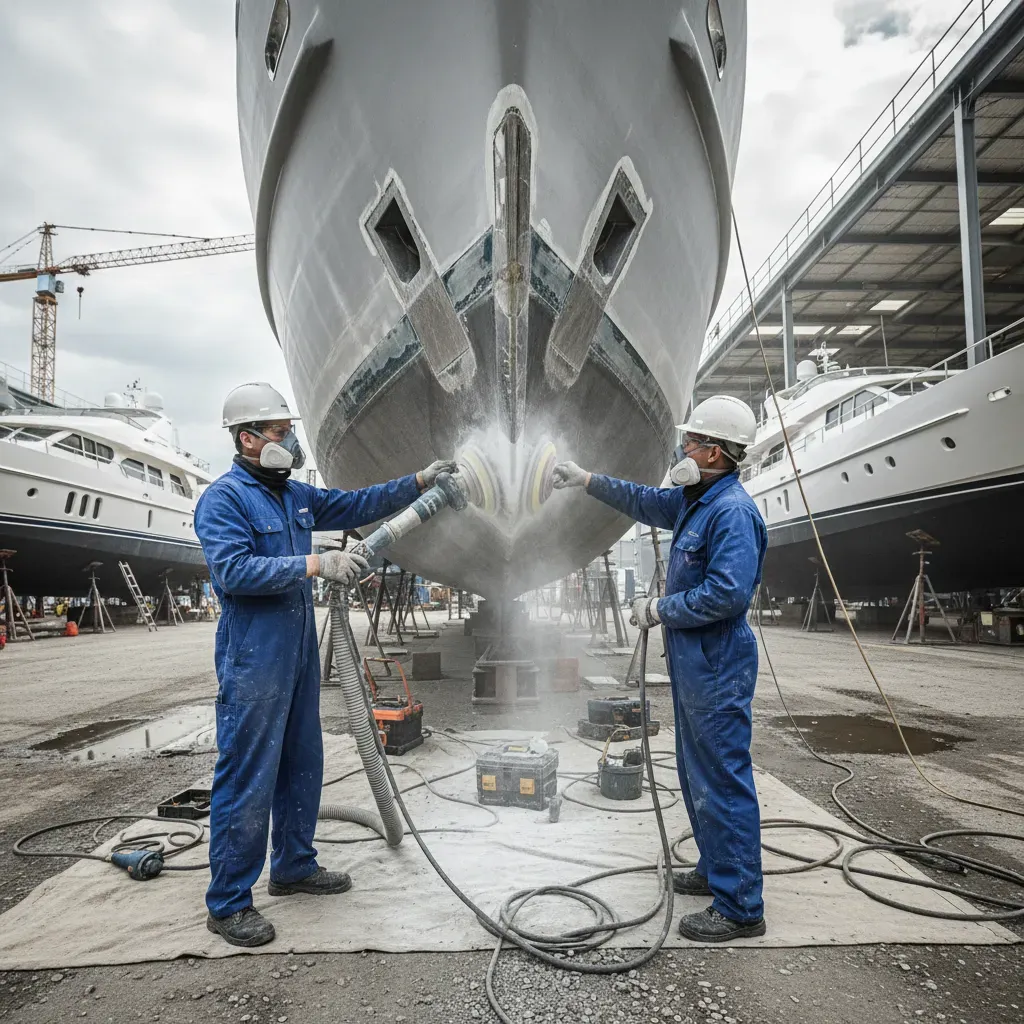
Every vessel has different engine hours, class survey dates, and antifouling schedules. But planning them together lets you optimise yard capacity and crew timing.
Example: if three of your boats need a haul-out in the same period, you can negotiate a better price with the yard. But if all three go into dry dock the same week, none of them can sail. The right balance is staggering haul-outs 2-3 weeks apart. You still get the yard relationship benefit without grounding the entire fleet.
Shared spare parts inventory
If multiple vessels in your fleet use the same engine or generator brand, a common spare parts pool makes sense. In an emergency, you can transfer parts between boats. Bulk purchasing discounts are a bonus.
This matters most for fleets that cruise in remote areas. Finding a specific filter in the Caribbean can take days. If your fleet has a spare on another vessel, that delay shrinks to hours.
Learning from maintenance data
Say you have two boats with the same engine model and one is burning 30% more oil than the other. That is an early warning sign. With a single yacht, you would never spot it because you have nothing to compare against.
Analysing maintenance data across the fleet, rather than vessel by vessel, catches problems early and sharpens your cost projections.
For technical maintenance details, see our Yacht Maintenance and Safety Guide.
Crew rotation and sharing
Crew is the most complicated management area on a single yacht. In a fleet, it gets harder, but it also opens up some options that single-yacht owners do not have.
Rotation planning
Fleet crew rotation goes beyond planning leave for individual vessels. When a captain goes on leave, you can temporarily assign someone experienced from another boat in the fleet. This reduces the need for expensive emergency hires from outside.
For this to work, your crew need to know more than one vessel. Cross-training programmes — having a crew member work on a different boat at least once a year — build that flexibility.
Certificate tracking at scale
Tracking STCW, ENG1, and position-specific certificate expiry dates for every crew member across a fleet is a different problem than doing it for one boat. One expired certificate can stop a vessel from sailing.
The maths gets heavy fast. Five boats, six crew each on average, three to four certificates per person. That is roughly 100 expiry dates. Managing those in a calendar or spreadsheet works until it does not, and the cost of missing one is a grounded vessel.
Crew pool and career paths
Owning a fleet means you can offer crew something most single-yacht owners cannot: a career path. A deckhand puts in time on a smaller vessel, proves themselves, and moves up to a larger one. People stay longer when they can see where they are going. And given that replacing one crew member costs EUR 5,000 to EUR 15,000, keeping them around is worth the effort.
For more on crew management, see our Yacht Crew Management guide.
KPIs: what to measure and why
With a single yacht, you can answer “is everything okay?” by gut feel. With a fleet, gut feel is not enough. You need numbers to know which boat is earning its keep, which one is bleeding money, and where you are losing efficiency.
The fleet KPIs that matter
Start with utilisation rate: days a vessel is actually used divided by days available. For charter fleets this ties directly to revenue. For private fleets it tells you something owners often do not want to hear. A yacht used 20 days a year with EUR 500,000 in annual running costs works out to EUR 25,000 per day of use. That tends to start conversations.
Med charter yachts typically hit 65-75% utilisation in high season, 40-55% over the full year. Private owners tend to use their boats 4-8 weeks a year. Do the maths on your own fleet and see where you land.
Next, unplanned downtime. Not scheduled maintenance, which is normal, but the days lost to breakdowns and surprise repairs. If one boat is consistently worse than the others on this metric, either the maintenance approach or the vessel itself needs attention.
Then there is cost per vessel. Track each boat’s total annual operating cost separately and compare. Two similar-sized yachts with a 40% cost gap? Worth investigating. Age, usage patterns, and how well the captain coordinates maintenance all play into it.
Finally, maintenance cost per engine hour. This is the fairest way to compare vessels because it normalises for usage intensity. A boat running 1,500 hours a year and one running 400 are not comparable on raw spend alone.
No data, no decisions
Collecting these KPIs requires consistent data. If one captain sends monthly reports by email and another shares photos on WhatsApp, you cannot analyse anything fleet-wide. Standard data collection formats and regular reporting intervals come before everything else.
Digital tools and the central dashboard
Most people who try to manage a fleet on spreadsheets give up around the third boat. Different files, different formats, data you cannot trust to be current. At some point a central digital system stops being optional.
What fleet management software needs to do:
- Show all vessels’ maintenance schedules, engine hours, and certificate expiry dates on one screen
- Provide per-vessel and consolidated financial reporting
- Automate crew rotation reminders and certificate tracking
- Support task assignment and status tracking between captains, fleet managers, and owners
- Offer a fleet-wide KPI dashboard
The point of all this is to stop finding out about problems after they have already cost you money. You want to see which boat needs yard time next month, not next week when it is too late to schedule.
Marinix OS does this for yacht fleets specifically. Maintenance, crew, costs, and compliance for every vessel in one dashboard. Same view whether you have two boats or twenty.
For a detailed comparison of yacht management software options, see our Yacht Management Software guide. For charter-specific fleet operations, see Charter Fleet Management.
Wrapping up
Running a fleet is a different job from running a yacht. More boats does not just mean more of the same work. It means different work: coordinating maintenance windows, moving crew between vessels, comparing costs, keeping five sets of certificates current. The people who do it well tend to be the ones who accepted early on that their single-yacht habits would not scale, and built something new.
If you are not sure where to start, ask yourself one question: can you see the status of every vessel right now, from where you are sitting? If the answer is no, that is your first problem to solve.
FAQ
How is fleet management different from managing a single yacht?
Coordination. With one yacht you talk to the captain and track things in a spreadsheet. With a fleet there is a whole layer between you and the vessels: who reports what, when maintenance overlaps between boats, how crew move around. Scheduling conflicts, inconsistent standards, and figuring out why one boat costs twice as much as another — none of that exists with a single yacht.
When should I switch to fleet management software?
Most people hit the wall at the third boat. Two can be managed with a good spreadsheet and discipline. Three is where maintenance calendars start overlapping, crew certificates pile up, and per-vessel cost tracking gets messy enough that something slips. There is no penalty for switching early. Switching late tends to come with a story about a missed certificate or a haul-out that nobody scheduled.
Can crew be shared between vessels in a fleet?
Yes, and it is one of the real advantages of running a fleet. When a captain takes leave, you can assign someone from another vessel rather than hiring externally. This requires cross-training — crew need to be familiar with more than one boat. Fleet ownership also lets you offer career progression (deckhand on a smaller boat moving to a larger one), which helps with retention.
What KPIs should I track for a yacht fleet?
Utilisation rate (days used vs days available), unplanned downtime, annual operating cost per vessel, and maintenance cost per engine hour. That last one is probably the most useful because it normalises for how hard each boat is actually working. Choosing which metrics to track is the easy part. Getting every captain to report the same data in the same format at the same interval is where it gets difficult.